ZS3L Reset & Teardown (FCC ID 2ANDL-ZS3L)
Factory reset and internal photos for Tuya Global ZS3L. Tuya / Smart Life smart plug.
January 15, 2026
•
8 read
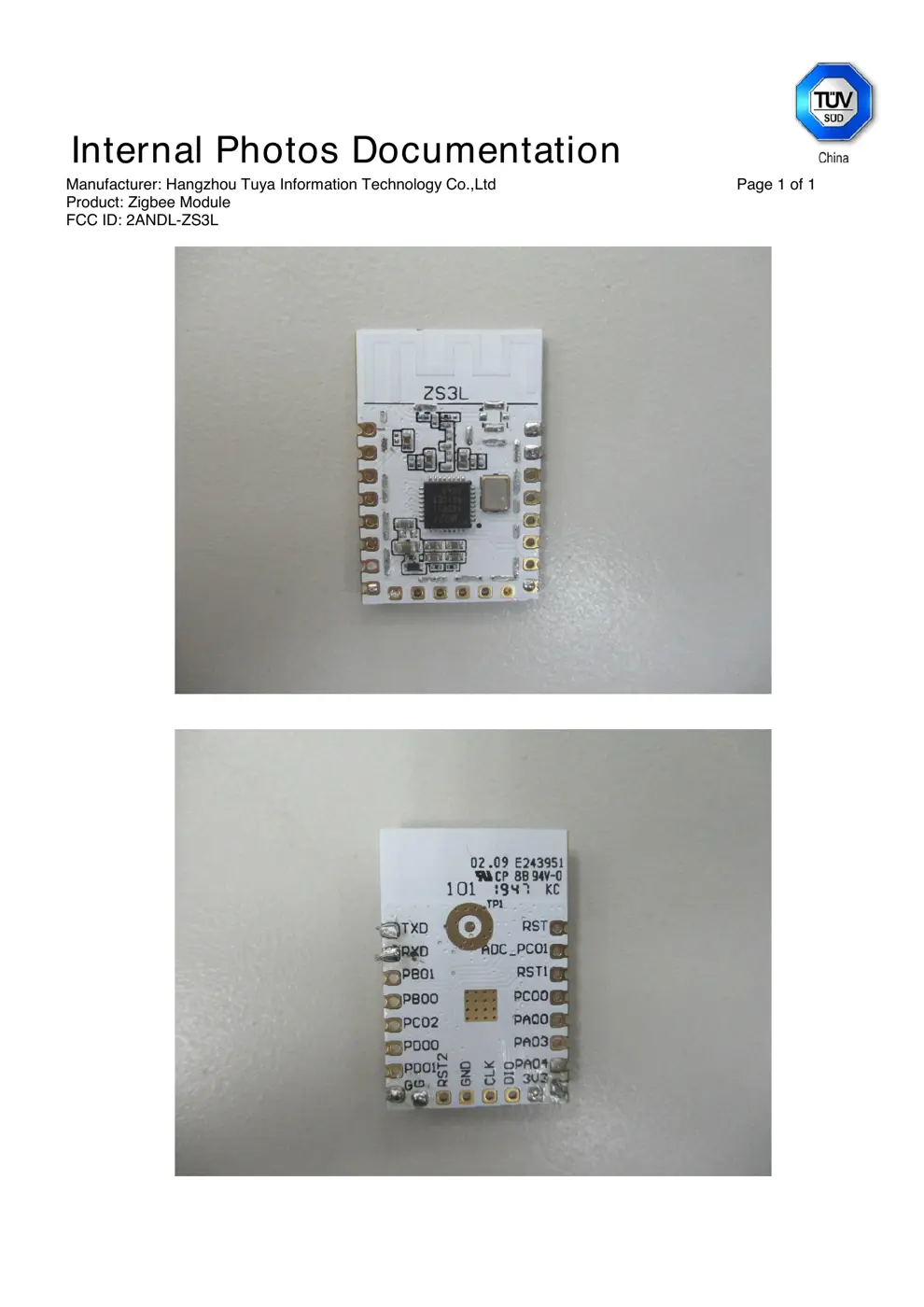
Before you buy the Tuya Global ZS3L, check what's inside.
The Tuya ZS3L is a low-power embedded Zigbee module designed for smart home applications. It features an Arm Cortex-M33 processor and is suitable for integration into various intelligent devices.
⚠️ NOTE: Ensure correct battery polarity when installing. This module operates at low voltage and is not intended for direct connection to mains power.
Quick Specs
- Manufacturer: Tuya Global
- Model: ZS3L
- Protocol: Zigbee
- Chipset: Beken Zigbee
- Ecosystem: Tuya / Smart Life
- App: Smart Life
🔧 Geek Corner (Flashing Info)
- Chipset: EFR32MG21A020F768IM32-B
- Flashable: ❌ No
- Info: The module is designed for Zigbee communication only and does not appear to support custom firmware flashing like Tasmota or ESPHome.
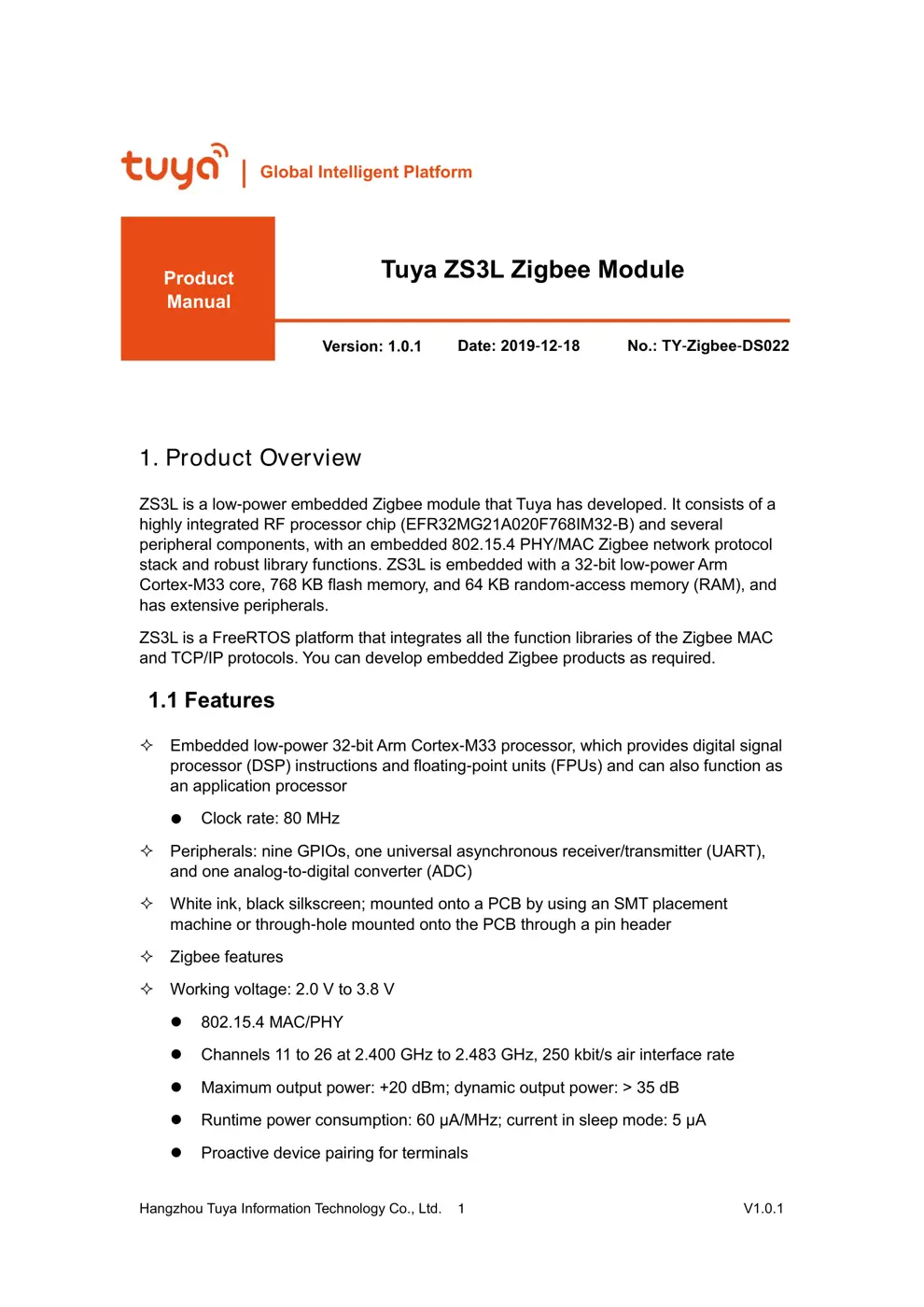
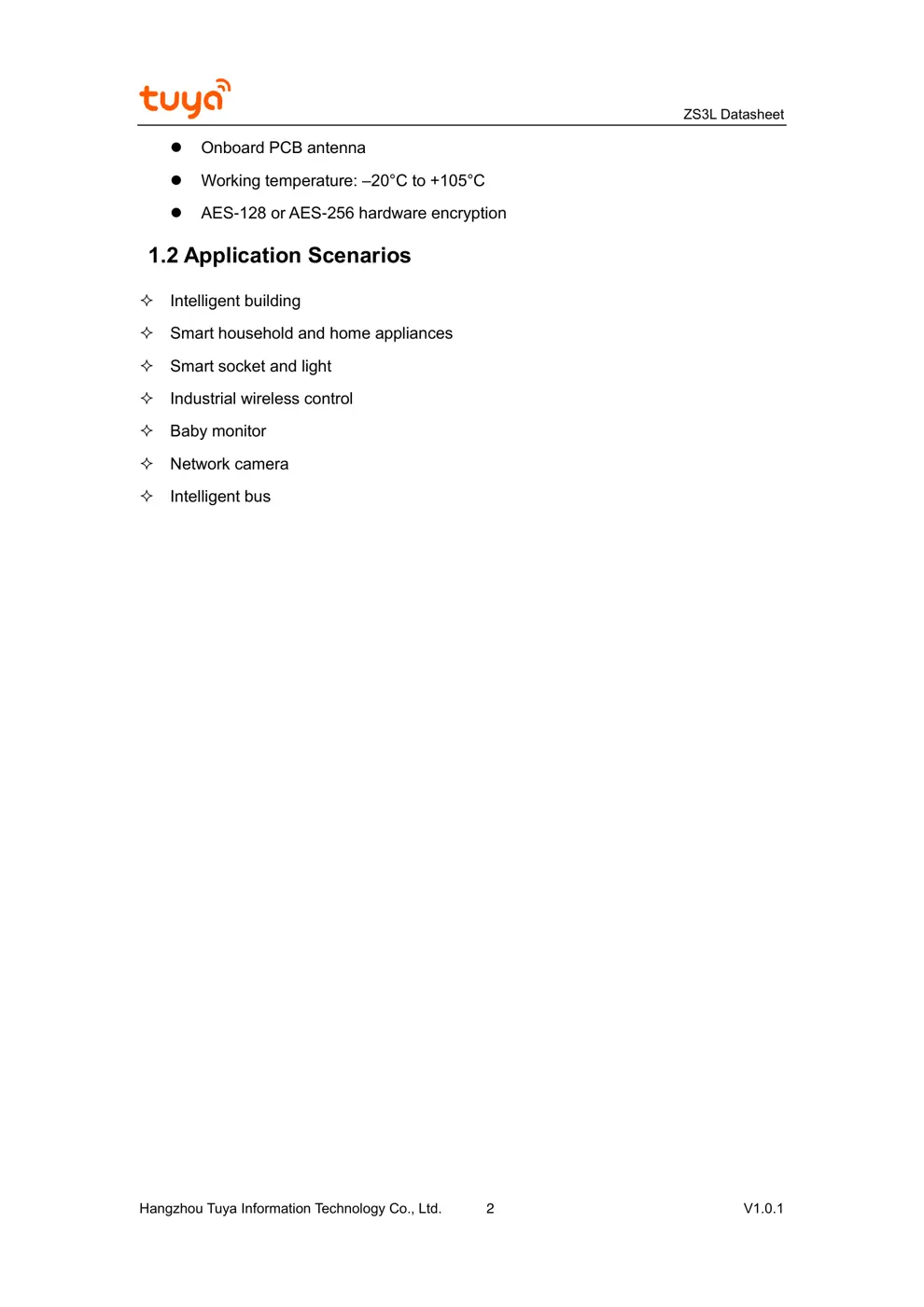
User Manual
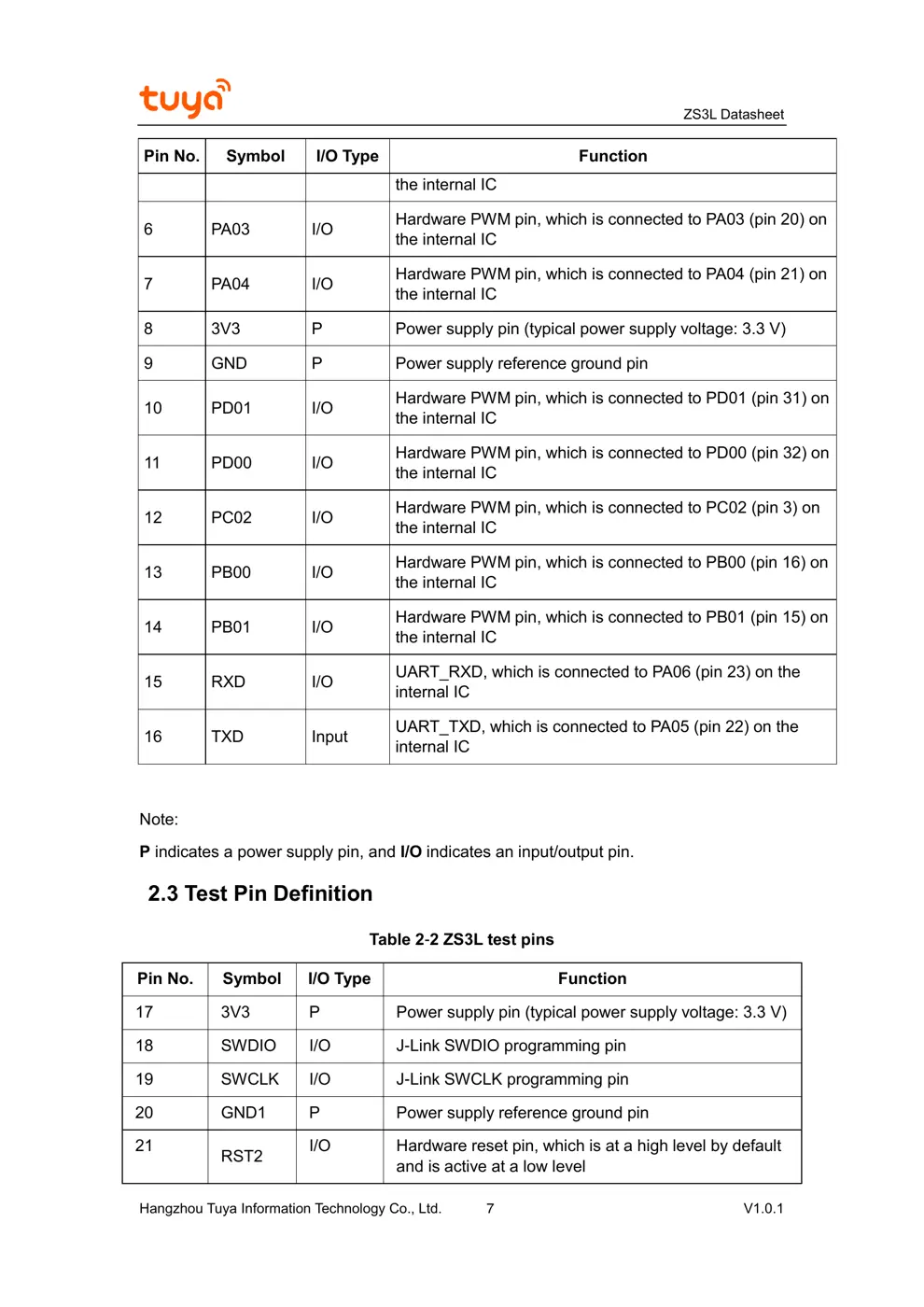
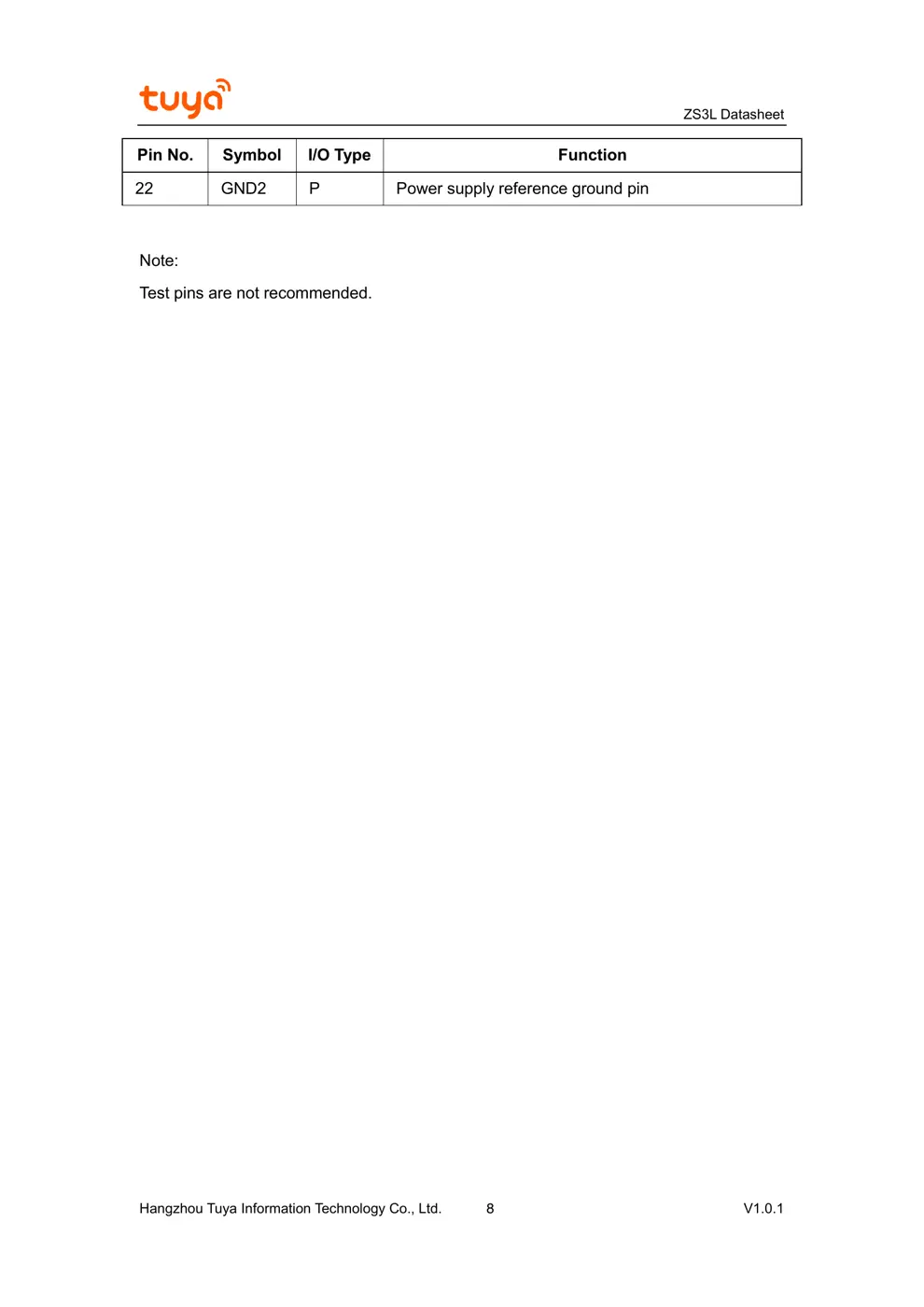
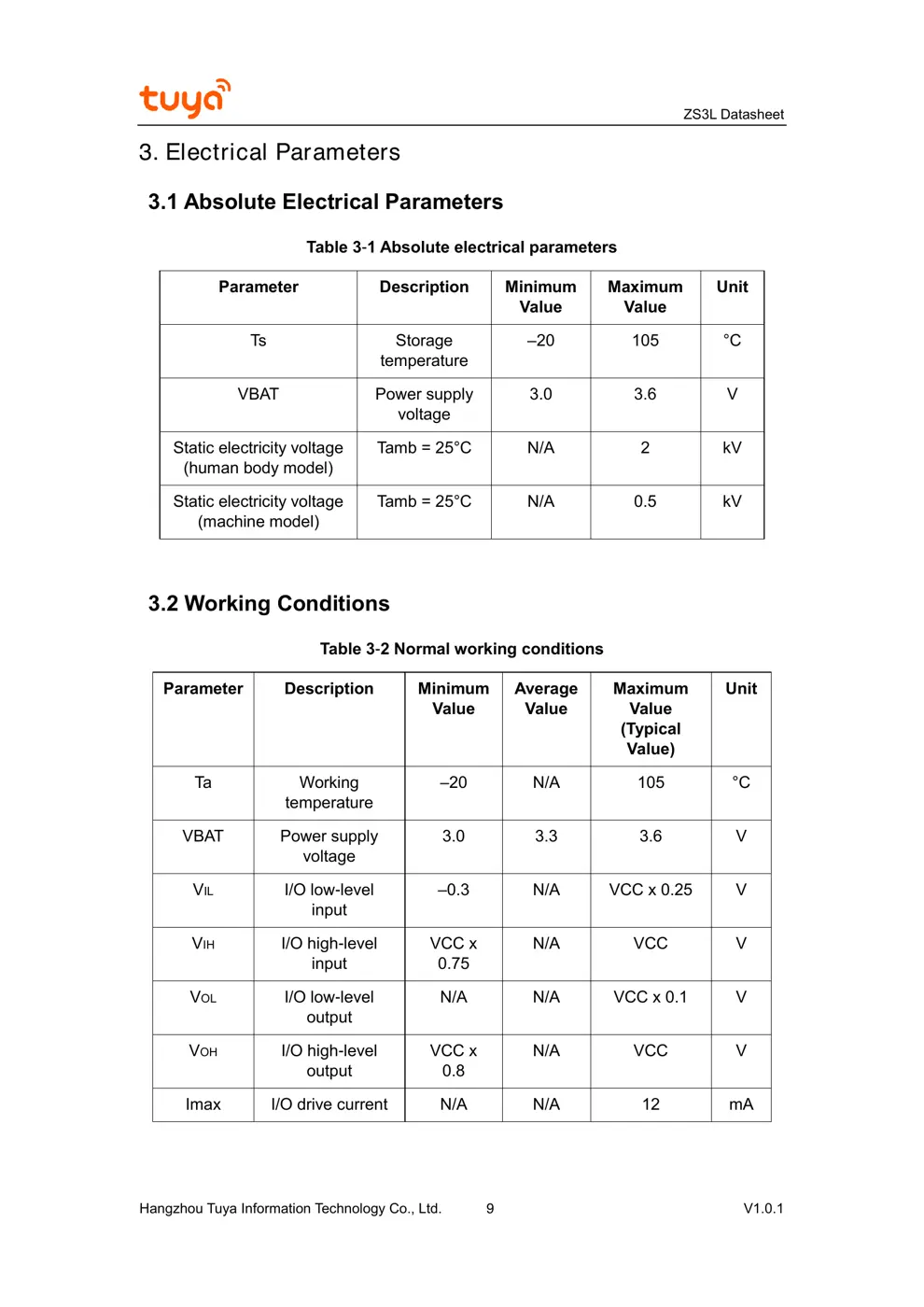
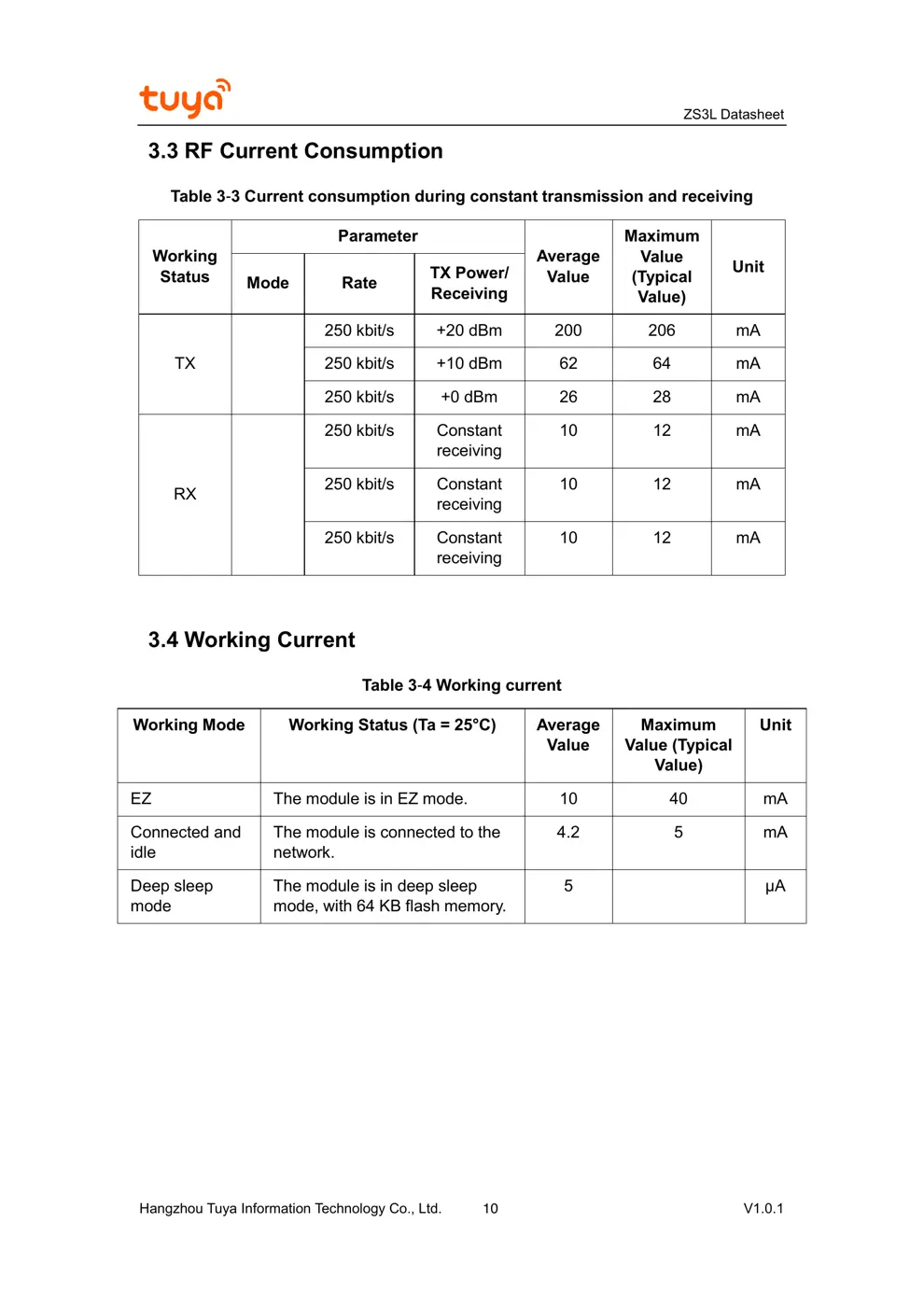
Scanned pages from the official user manual:
External Photos
Photos of the device exterior:
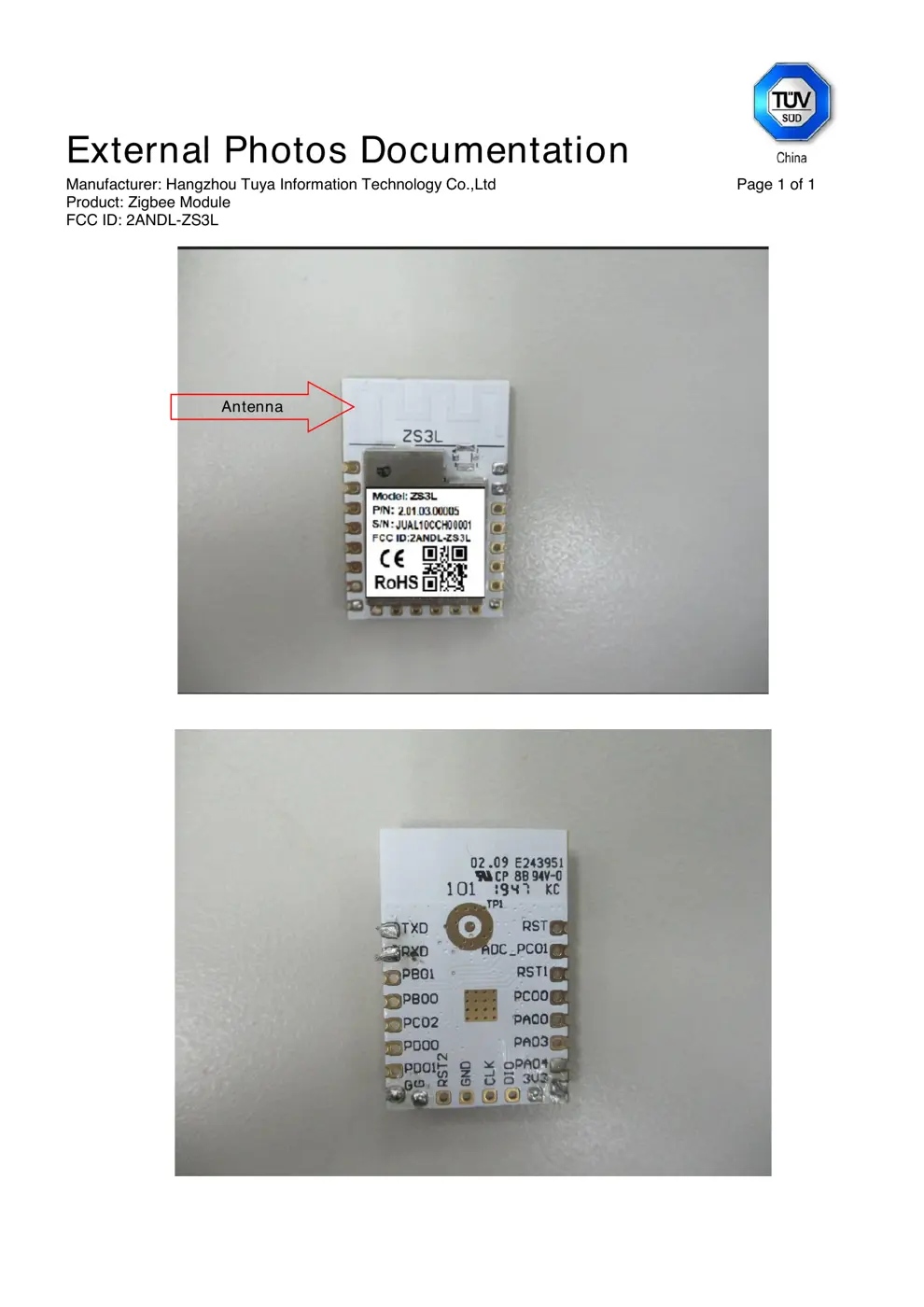
Internal Photos
Teardown photos showing the PCB and components:
Verdict
The ZS3L is a Zigbee device from the Tuya / Smart Life ecosystem.
📄 Click to view full text manual (SEO)
Hangzhou Tuya Information Technology Co., Ltd. 1 V1.0.1

1. Product Overview
ZS3L is a low-power embedded Zigbee module that Tuya has developed. It consists of a
highly integrated RF processor chip (EFR32MG21A020F768IM32-B) and several
peripheral components, with an embedded 802.15.4 PHY/MAC Zigbee network protocol
stack and robust library functions. ZS3L is embedded with a 32-bit low-power Arm
Cortex-M33 core, 768 KB flash memory, and 64 KB random-access memory (RAM), and
has extensive peripherals.
ZS3L is a FreeRTOS platform that integrates all the function libraries of the Zigbee MAC
and TCP/IP protocols. You can develop embedded Zigbee products as required.
1.1 Features
 Embedded low-power 32-bit Arm Cortex-M33 processor, which provides digital signal
processor (DSP) instructions and floating-point units (FPUs) and can also function as
an application processor
⚫ Clock rate: 80 MHz
 Peripherals: nine GPIOs, one universal asynchronous receiver/transmitter (UART),
and one analog-to-digital converter (ADC)
 White ink, black silkscreen; mounted onto a PCB by using an SMT placement
machine or through-hole mounted onto the PCB through a pin header
 Zigbee features
 Working voltage: 2.0 V to 3.8 V
⚫ 802.15.4 MAC/PHY
⚫ Channels 11 to 26 at 2.400 GHz to 2.483 GHz, 250 kbit/s air interface rate
⚫ Maximum output power: +20 dBm; dynamic output power: > 35 dB
⚫ Runtime power consumption: 60 µA/MHz; current in sleep mode: 5 µA
⚫ Proactive device pairing for terminals
Tuya ZS3L Zigbee Module
Version: 1.0.1
 Date: 2019-12-18
 No.: TY-Zigbee-DS022
Global Intelligent Platform
Product
Manual
 ZS3L Datasheet
Hangzhou Tuya Information Technology Co., Ltd. 2 V1.0.1
⚫ Onboard PCB antenna
⚫ Working temperature: –20°C to +105°C
⚫ AES-128 or AES-256 hardware encryption
1.2 Application Scenarios
 Intelligent building
 Smart household and home appliances
 Smart socket and light
 Industrial wireless control
 Baby monitor
 Network camera
 Intelligent bus
 ZS3L Datasheet
Hangzhou Tuya Information Technology Co., Ltd. 3 V1.0.1
Change History
No. Date Change Description Version After
Change
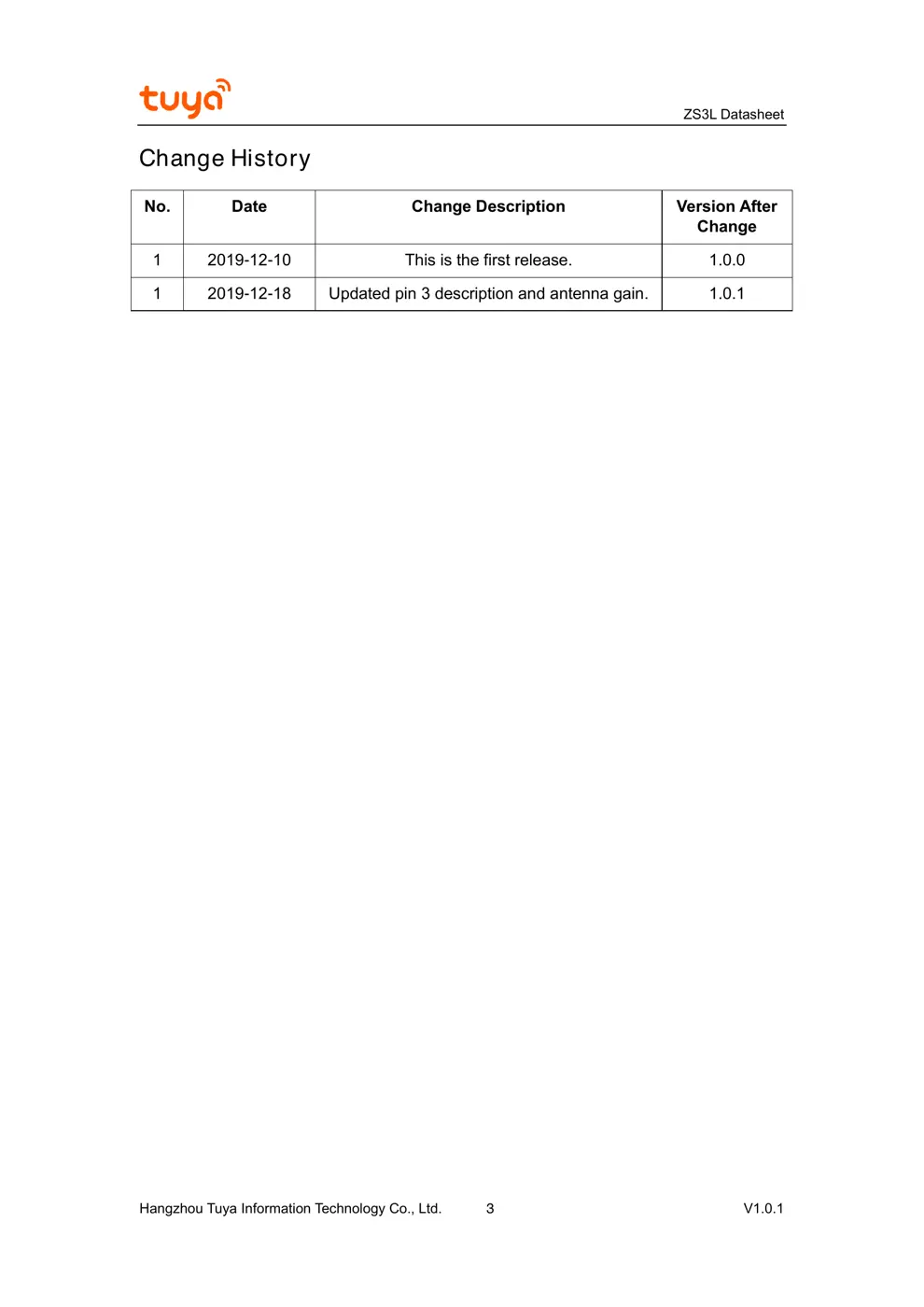
1 2019-12-10 This is the first release. 1.0.0
1 2019-12-18 Updated pin 3 description and antenna gain. 1.0.1

 ZS3L Datasheet
Hangzhou Tuya Information Technology Co., Ltd. 4 V1.0.1
Contents
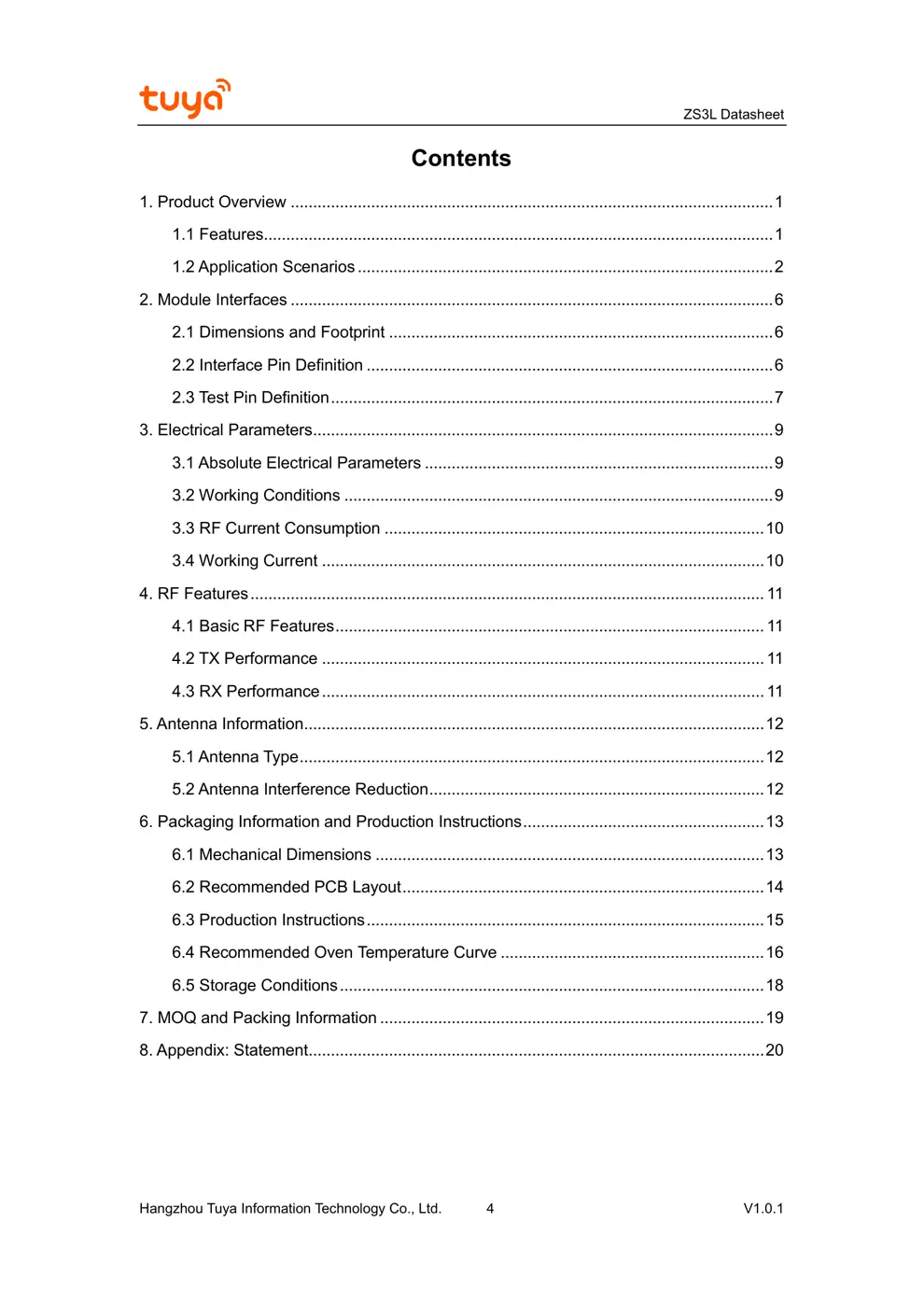
1. Product Overview ............................................................................................................ 1
1.1 Features .................................................................................................................. 1
1.2 Application Scenarios ............................................................................................. 2
2. Module Interfaces ............................................................................................................ 6
2.1 Dimensions and Footprint ...................................................................................... 6
2.2 Interface Pin...