01 Reset & Teardown (FCC ID 2AHMR-TB-01)
Factory reset and internal photos for Tuya OEM 01. Tuya / Smart Life smart plug.
January 15, 2026
•
8 read
Before you buy the Tuya OEM 01, check what's inside.
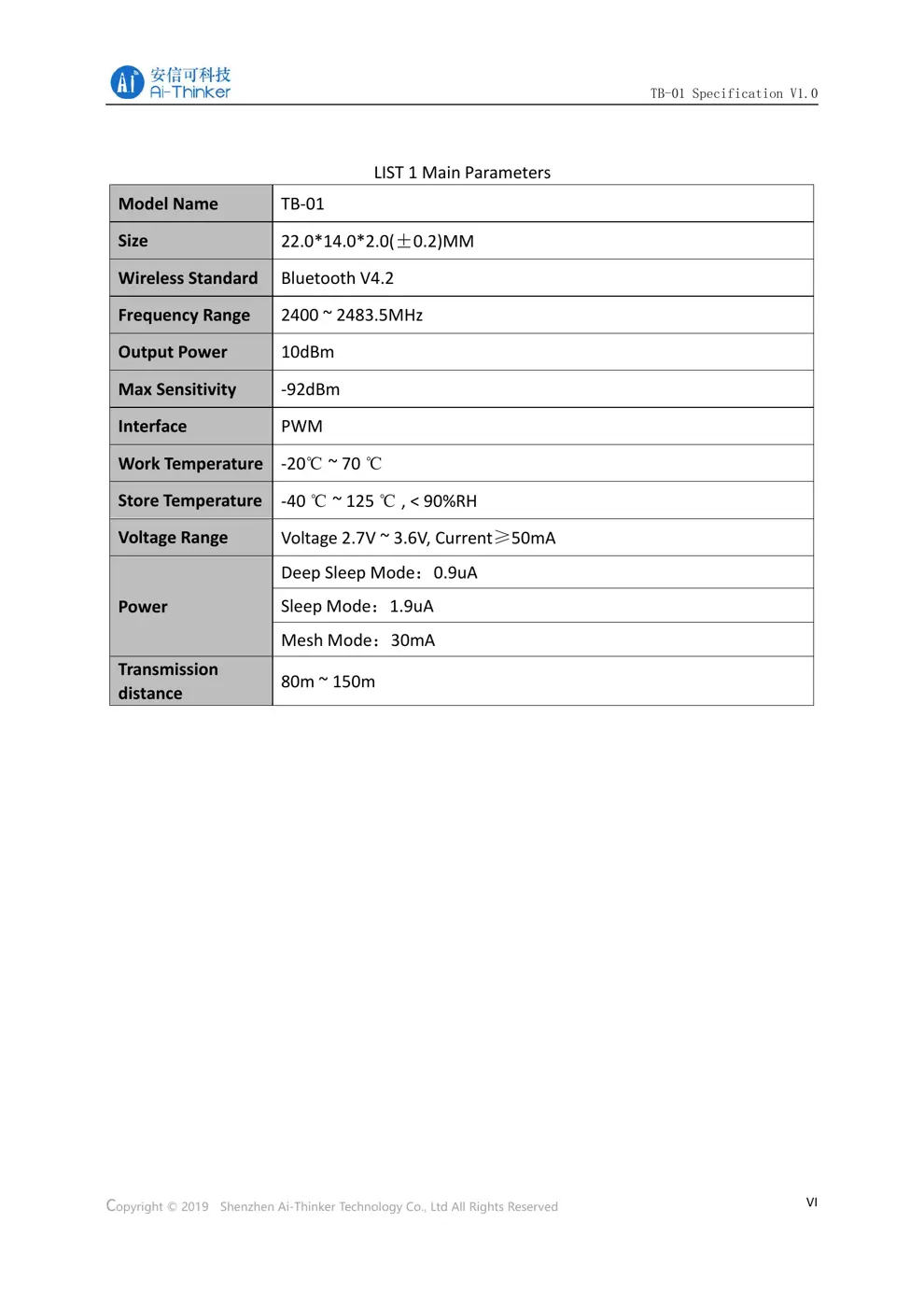
This device is a low-power Bluetooth module, likely a sensor or button, designed for use with the Tuya/Smart Life ecosystem. It is not a WiFi device and operates on battery power.
⚠️ NOTE: Ensure correct battery polarity when replacing.
Quick Specs
- Manufacturer: Tuya OEM
- Model: 01
- Protocol: Bluetooth
- Chipset: Realtek/Beken
- Ecosystem: Tuya / Smart Life
- App: Smart Life
🔧 Geek Corner (Flashing Info)
- Chipset: BK3431Q
- Flashable: ❌ No
- Info: Uses a proprietary BK3431Q Bluetooth chipset, which is not supported for flashing custom firmware like Tasmota.
User Manual
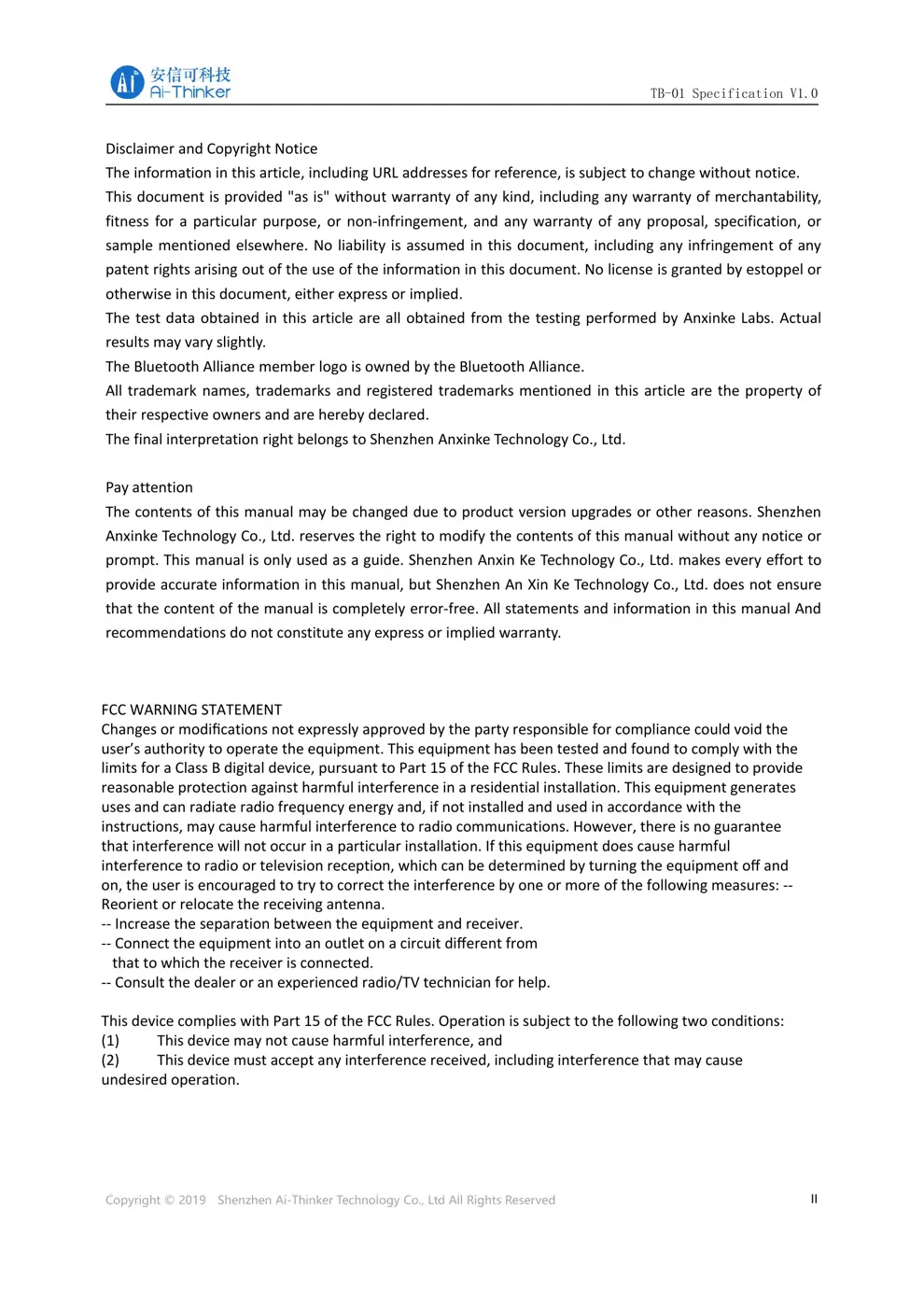
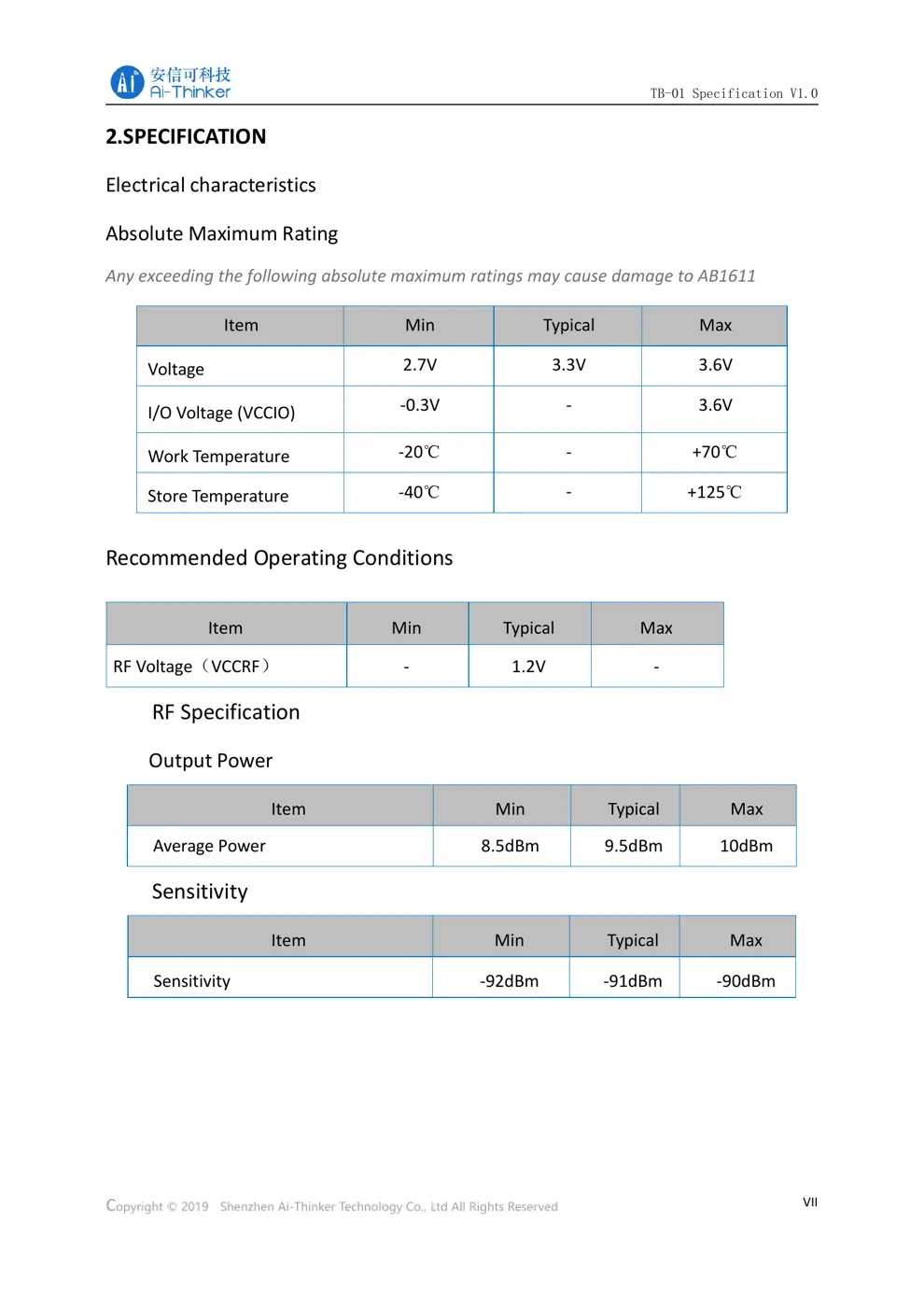
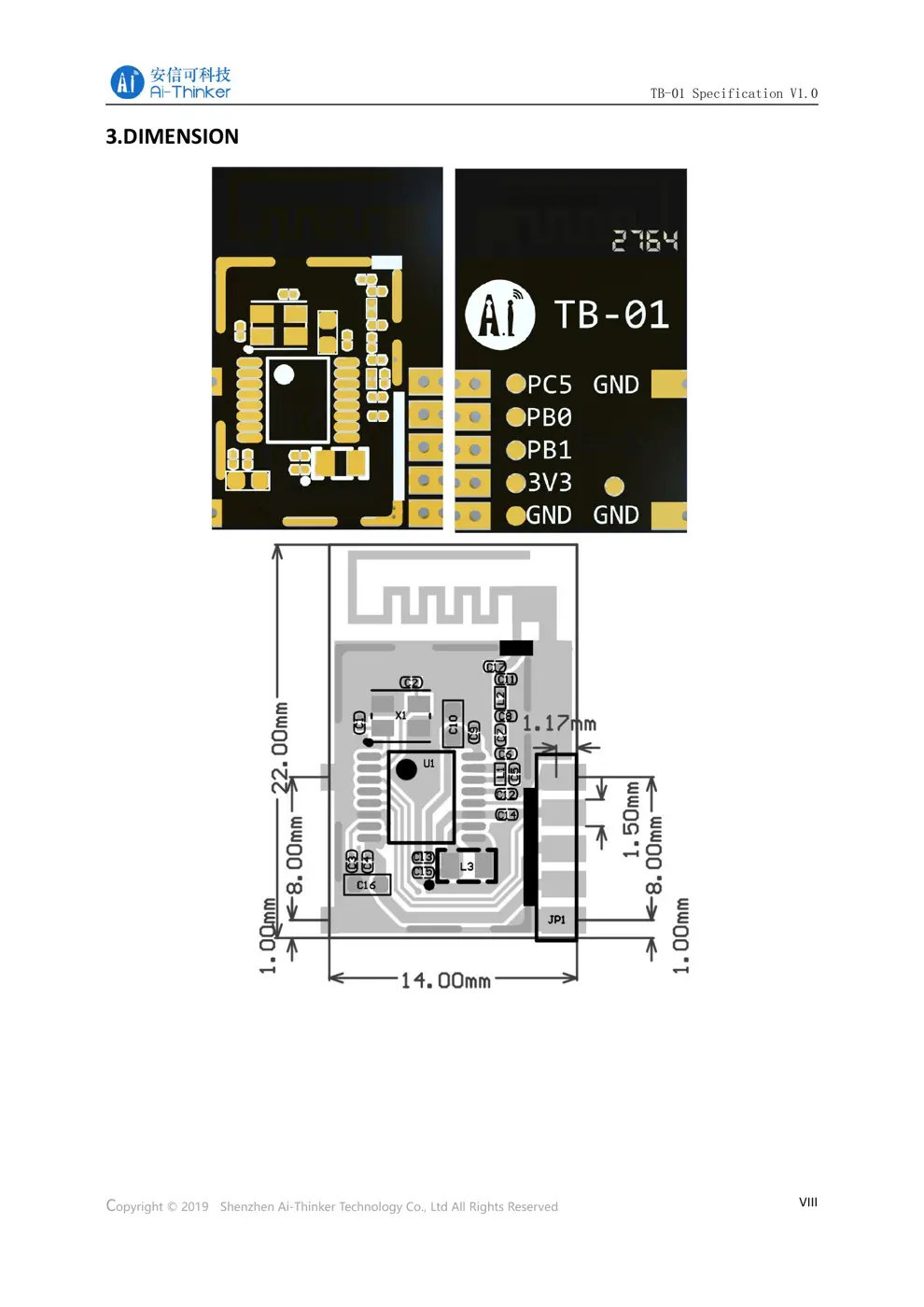
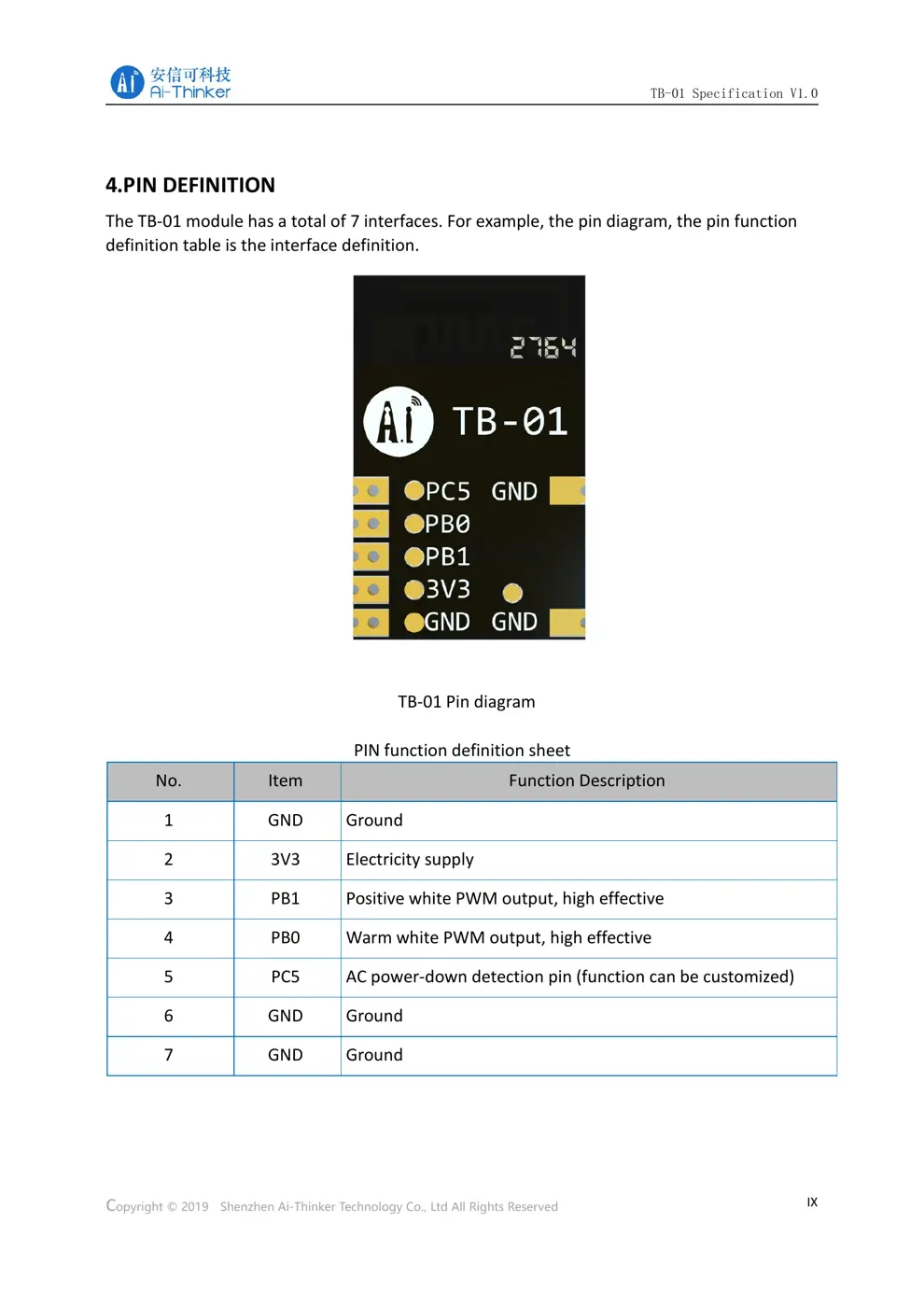
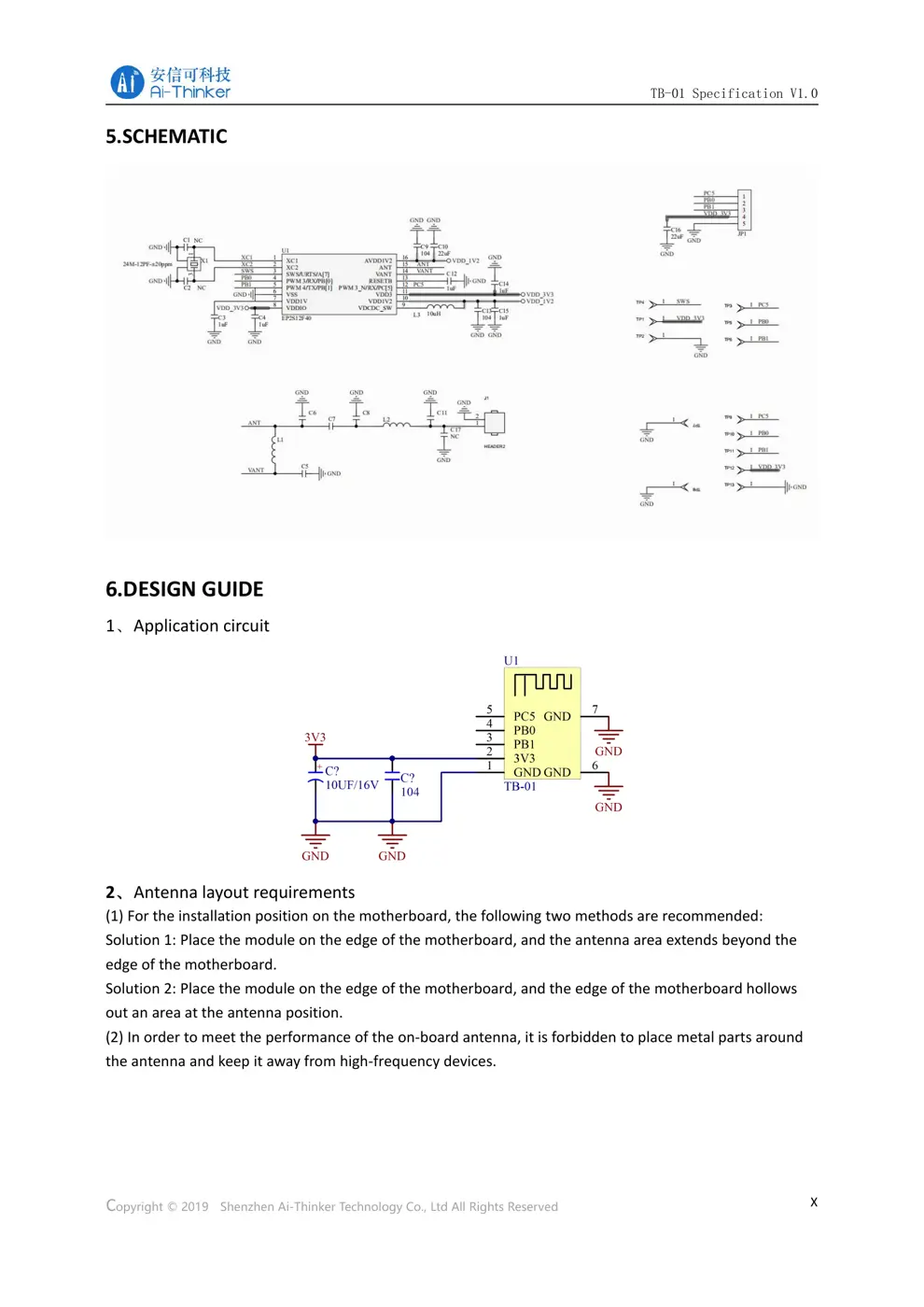
Scanned pages from the official user manual:
External Photos
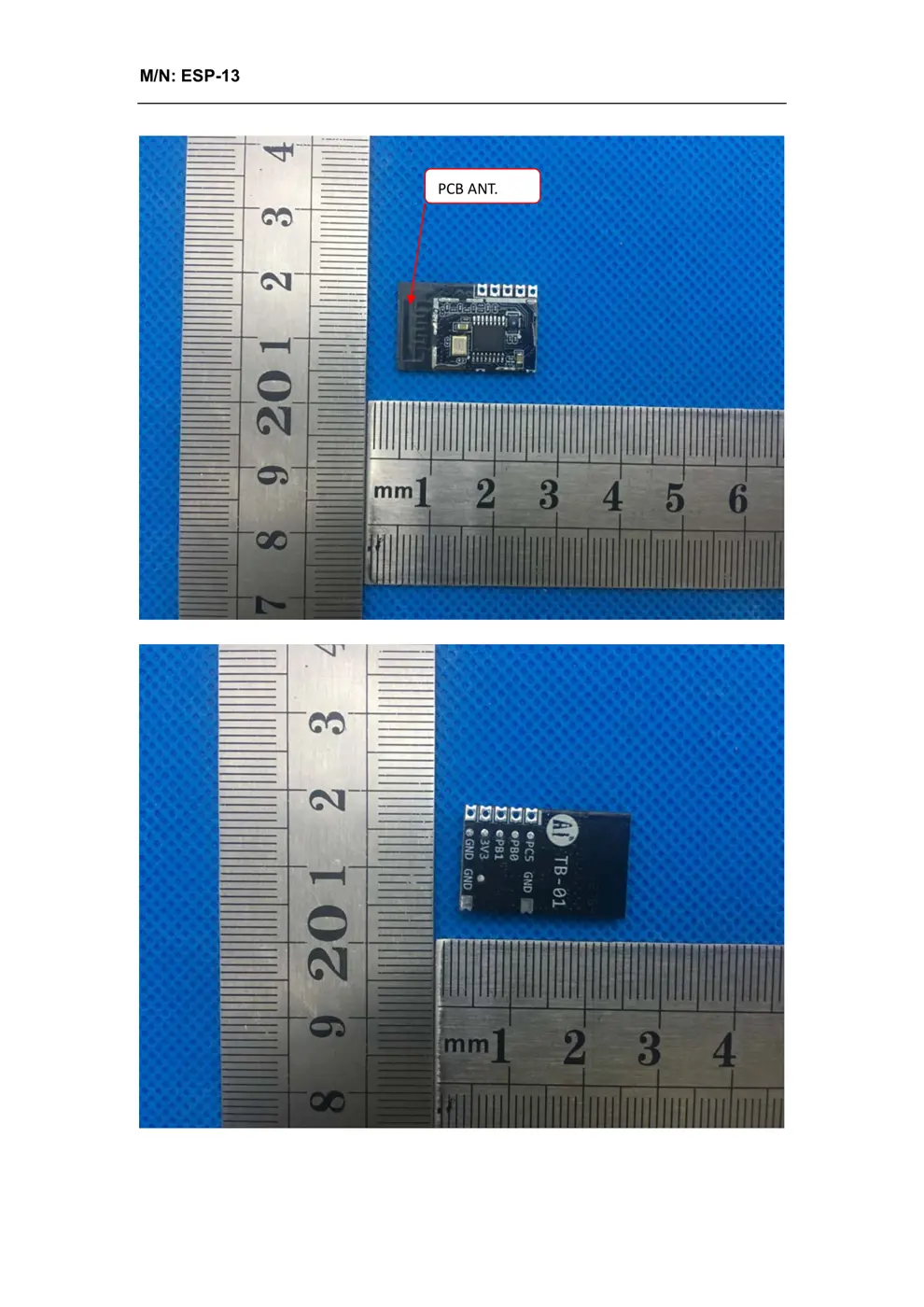
Photos of the device exterior:
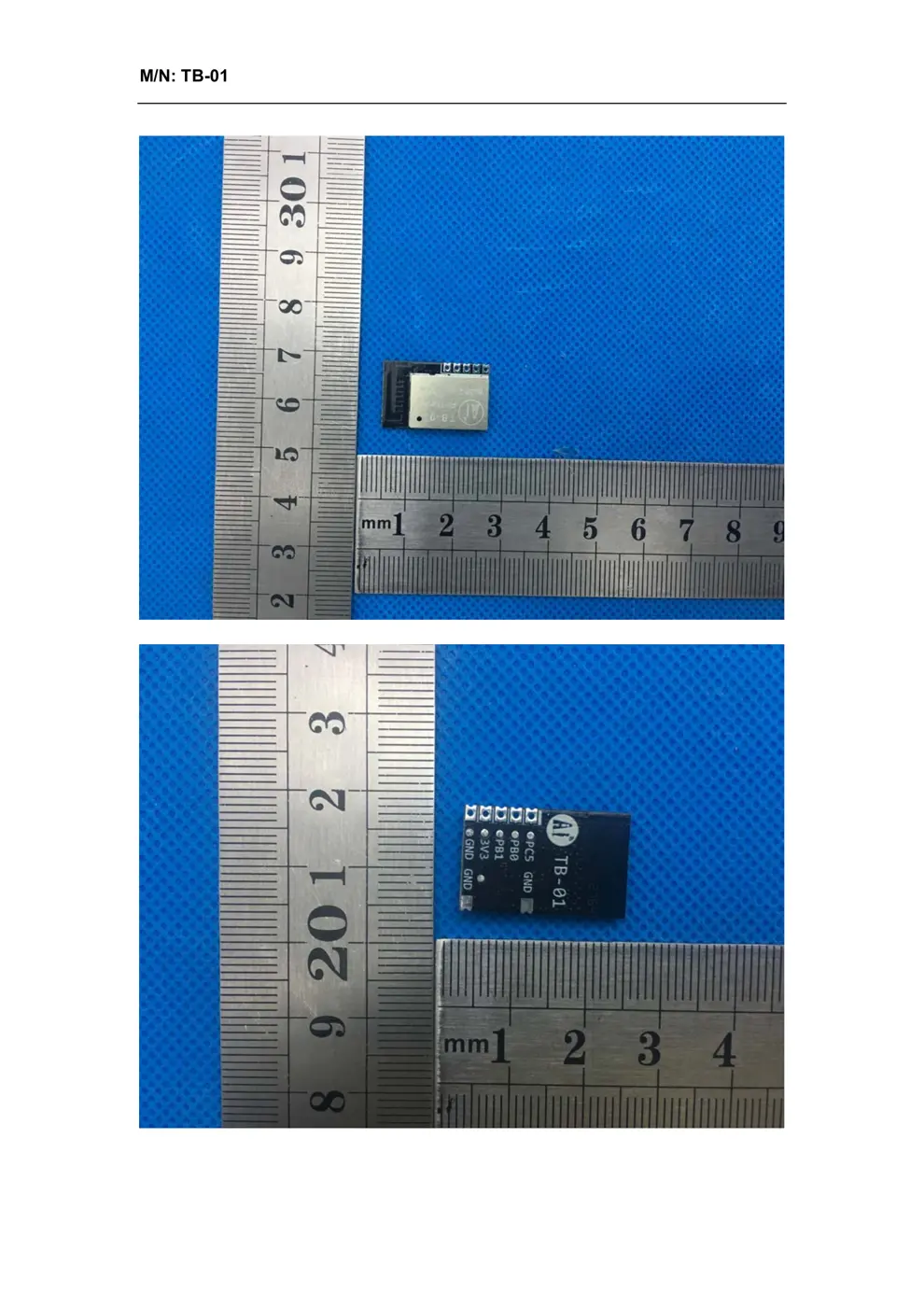
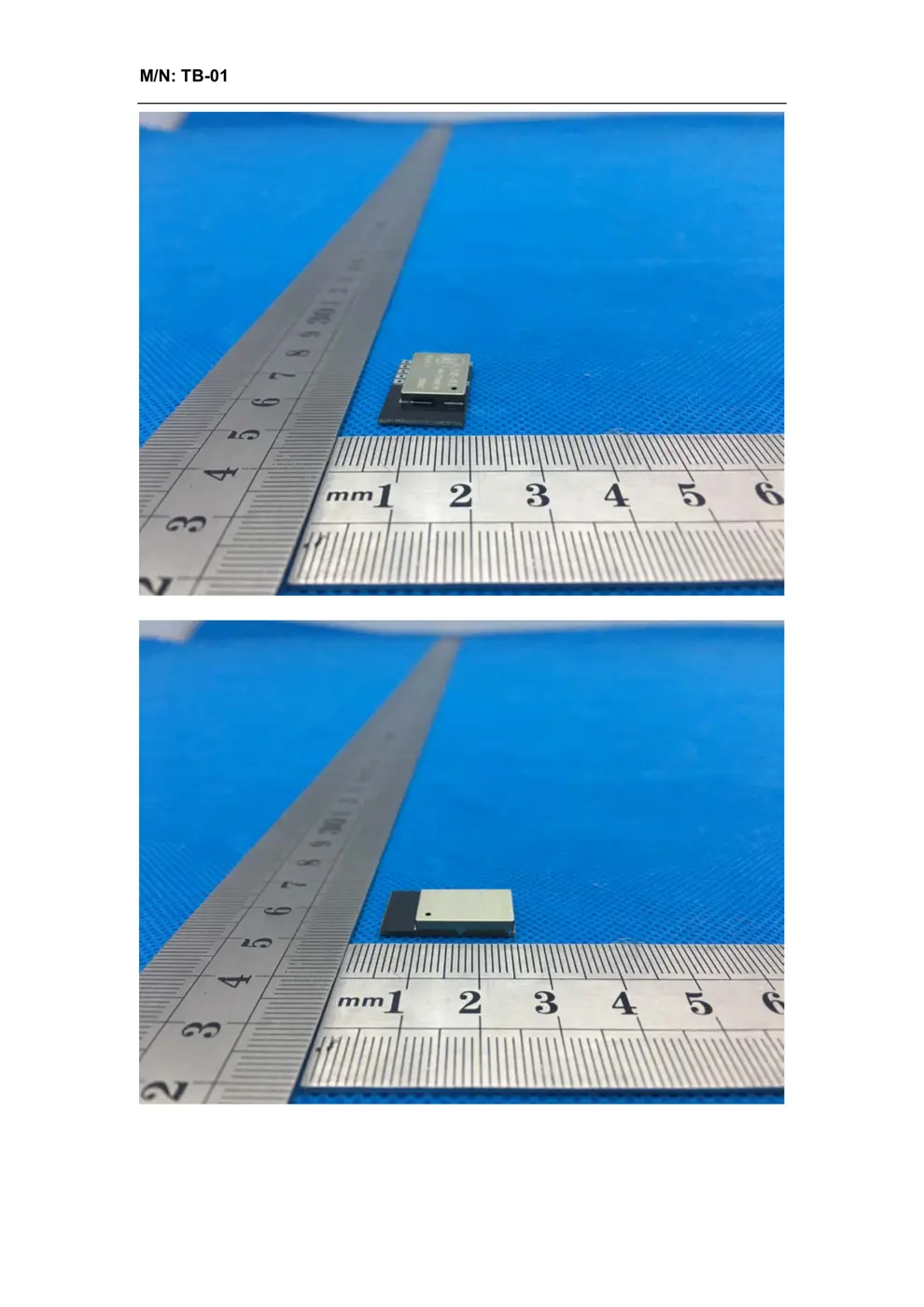
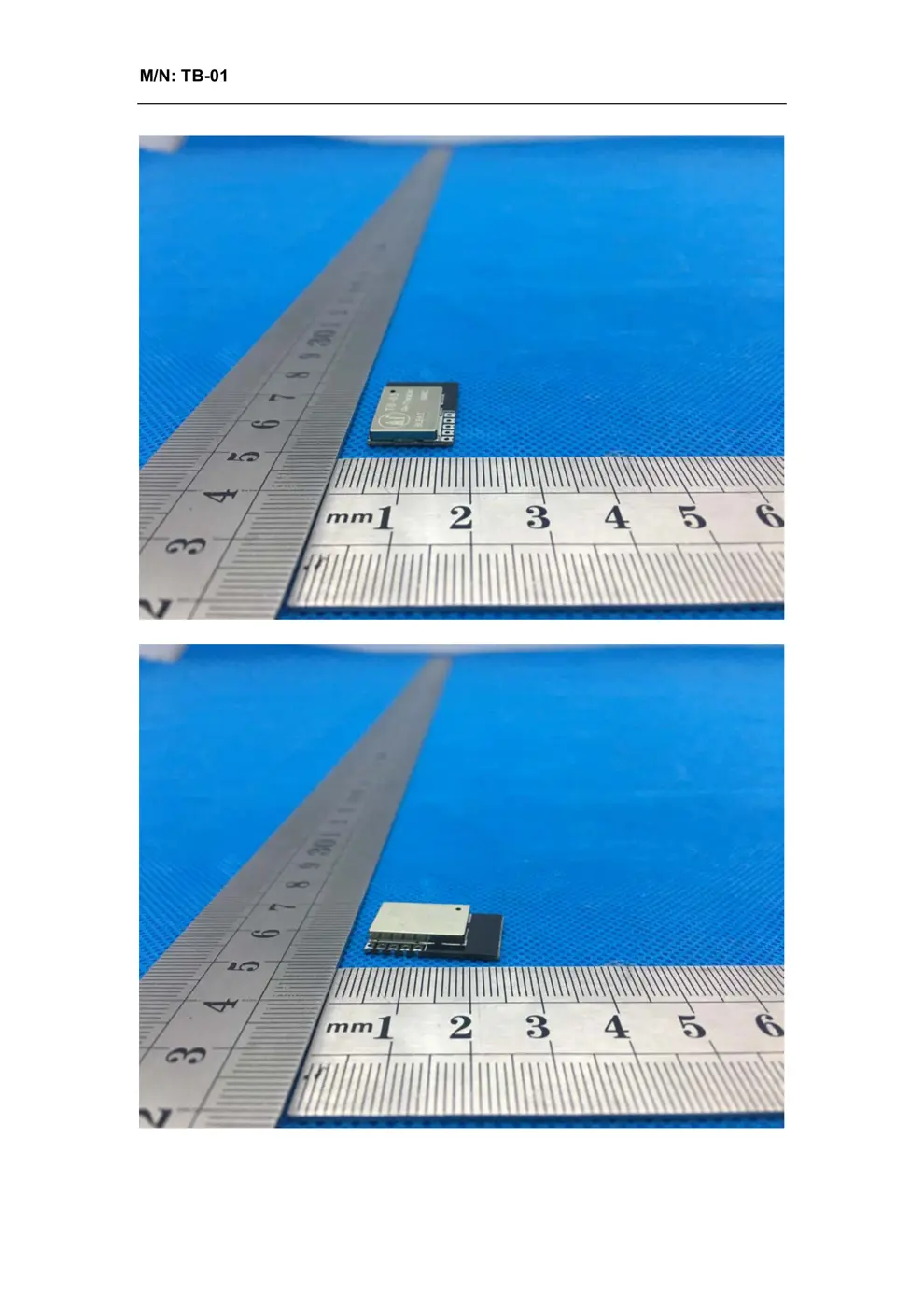
Internal Photos
Teardown photos showing the PCB and components:
Verdict
The 01 is a WiFi device from the Tuya / Smart Life ecosystem.
📄 Click to view full text manual (SEO)
TB-01 Specification V1.0
Copyright © 2019 Shenzhen Ai-Thinker Technology Co., Ltd All Rights Reserved I
TB-01 Specification
Version V1.0
Copyright ©2019
TB-01 Specification V1.0
Copyright © 2019 Shenzhen Ai-Thinker Technology Co., Ltd All Rights Reserved II
Disclaimer and Copyright Notice
The information in this article, including URL addresses for reference, is subject to change without notice.
This document is provided "as is" without warranty of any kind, including any warranty of merchantability,
fitness for a particular purpose, or non-infringement, and any warranty of any proposal, specification, or
sample mentioned elsewhere. No liability is assumed in this document, including any infringement of any
patent rights arising out of the use of the information in this document. No license is granted by estoppel or
otherwise in this document, either express or implied.
The test data obtained in this article are all obtained from the testing performed by Anxinke Labs. Actual
results may vary slightly.
The Bluetooth Alliance member logo is owned by the Bluetooth Alliance.
All trademark names, trademarks and registered trademarks mentioned in this article are the property of
their respective owners and are hereby declared.
The final interpretation right belongs to Shenzhen Anxinke Technology Co., Ltd.
Pay attention
The contents of this manual may be changed due to product version upgrades or other reasons. Shenzhen
Anxinke Technology Co., Ltd. reserves the right to modify the contents of this manual without any notice or
prompt. This manual is only used as a guide. Shenzhen Anxin Ke Technology Co., Ltd. makes every effort to
provide accurate information in this manual, but Shenzhen An Xin Ke Technology Co., Ltd. does not ensure
that the content of the manual is completely error-free. All statements and information in this manual And
recommendations do not constitute any express or implied warranty.
FCC WARNING STATEMENT
Changes or modifications not expressly approved by the party responsible for compliance could void the
user’s authority to operate the equipment. This equipment has been tested and found to comply with the
limits for a Class B digital device, pursuant to Part 15 of the FCC Rules. These limits are designed to provide
reasonable protection against harmful interference in a residential installation. This equipment generates
uses and can radiate radio frequency energy and, if not installed and used in accordance with the
instructions, may cause harmful interference to radio communications. However, there is no guarantee
that interference will not occur in a particular installation. If this equipment does cause harmful
interference to radio or television reception, which can be determined by turning the equipment off and
on, the user is encouraged to try to correct the interference by one or more of the following measures: --
Reorient or relocate the receiving antenna.
-- Increase the separation between the equipment and receive...