
BTU Reset & Teardown (FCC ID 2ANDL-BTU)
Factory reset and internal photos for Tuya Global BTU. Tuya / Smart Life smart plug.
January 15, 2026
•
8 read
Before you buy the Tuya Global BTU, check what's inside.
The BTU module is a low-power embedded Bluetooth LE 5.0 module developed by Tuya, featuring a TLSR8250 chipset and designed for applications requiring wireless communication within the 2.4GHz band. It operates on battery power, making it suitable for portable or battery-operated devices.
⚠️ NOTE: Ensure correct battery polarity and voltage range (1.8-3.6V) during operation.
Quick Specs
- Manufacturer: Tuya Global
- Model: BTU
- Protocol: Bluetooth
- Chipset: Realtek/Beken
- Ecosystem: Tuya / Smart Life
- App: Smart Life
🔧 Geek Corner (Flashing Info)
- Chipset: TLSR8250
- Flashable: ❌ No
- Info: The TLSR8250 chipset is not commonly supported for flashing custom firmware like Tasmota or ESPHome. Flashing is generally not feasible without vendor-specific tools or extensive reverse engineering.
User Manual
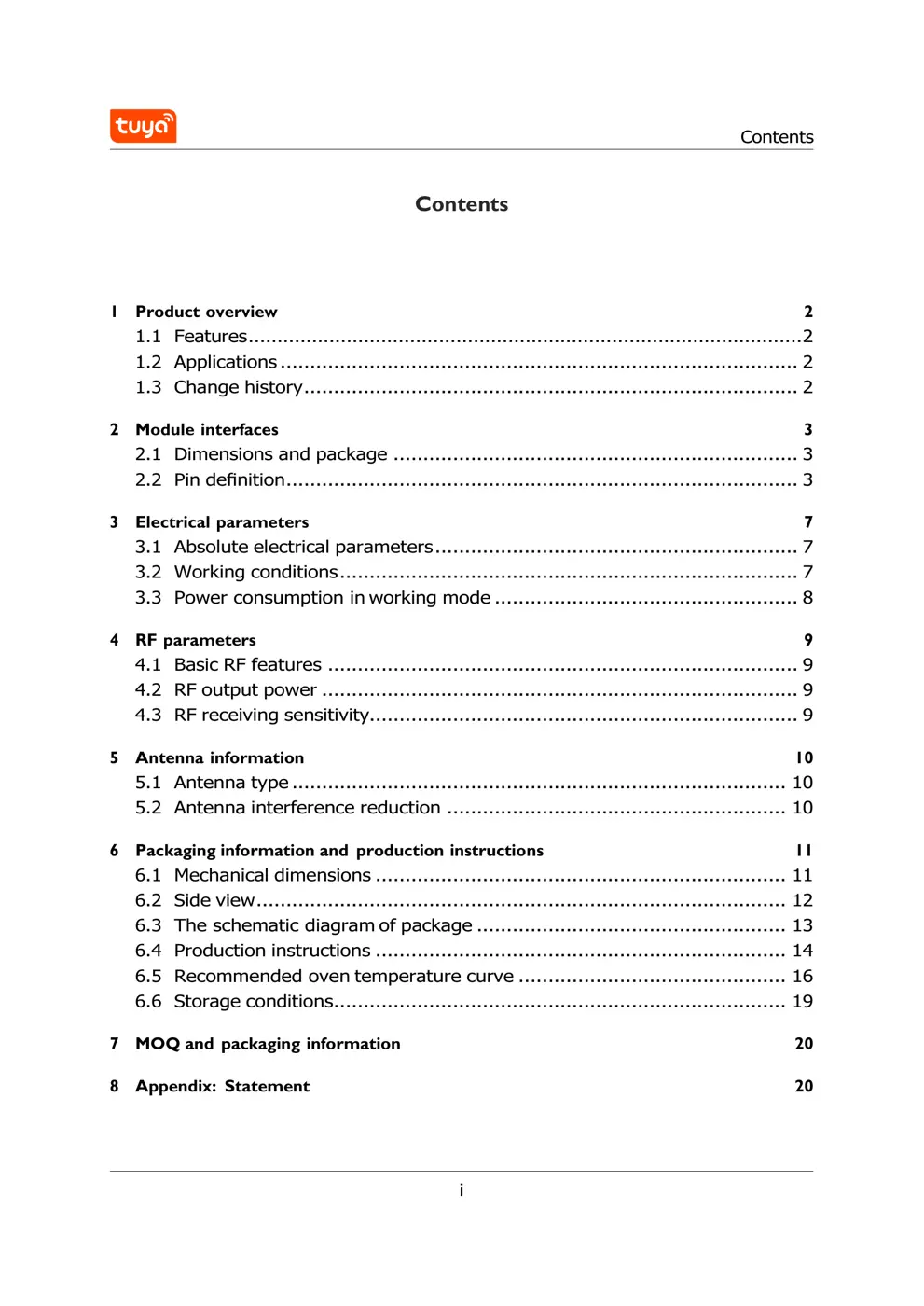
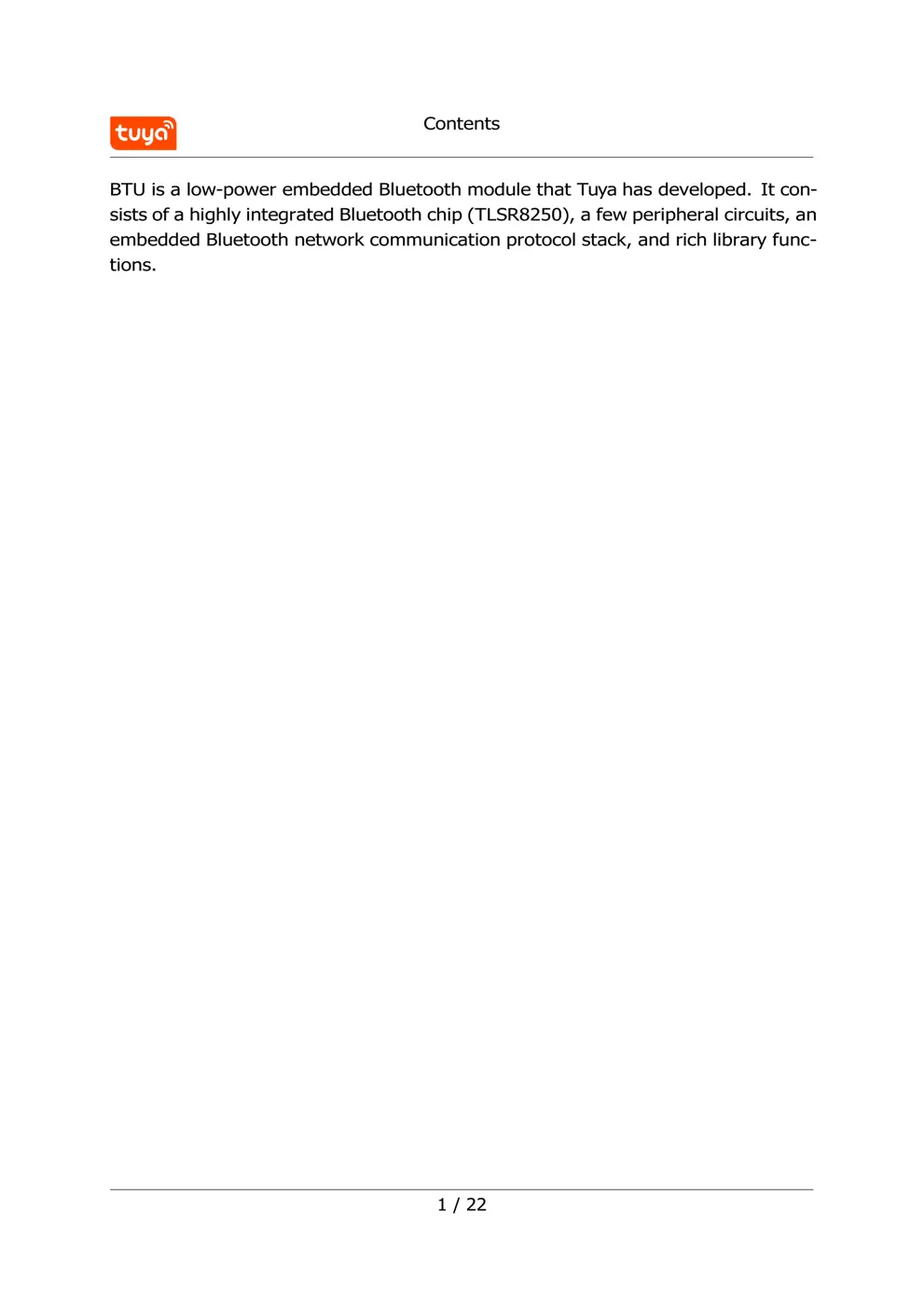
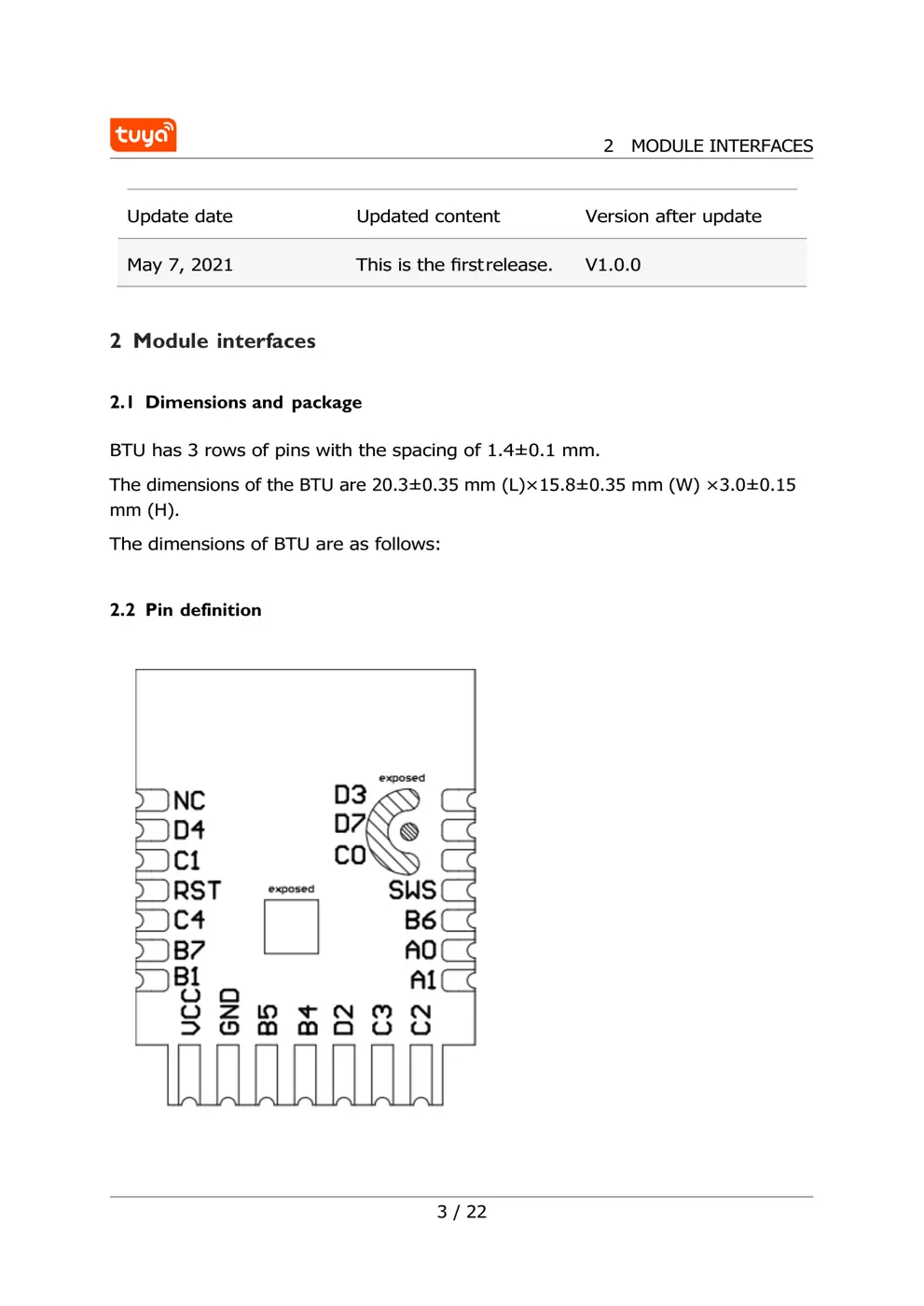
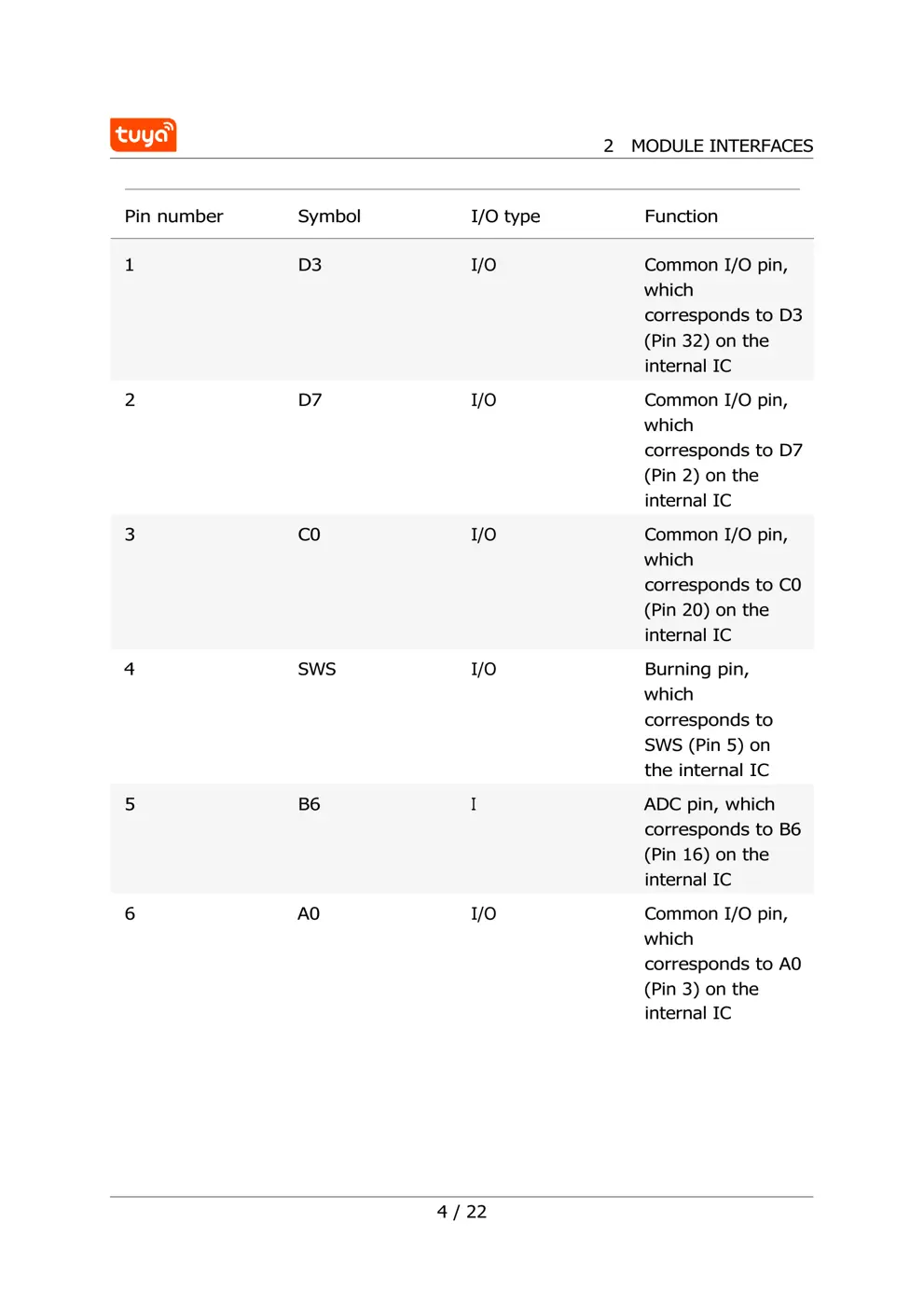
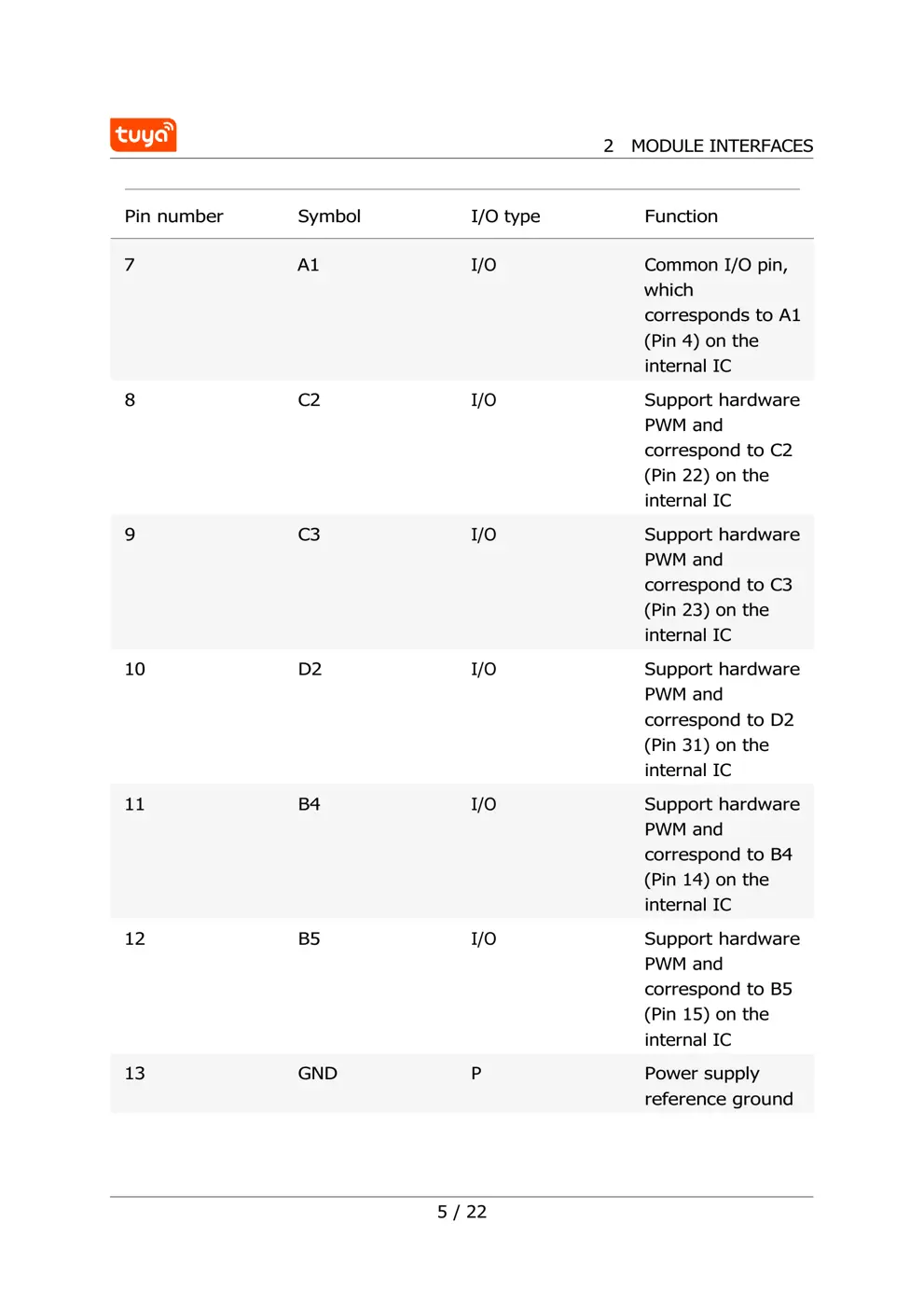
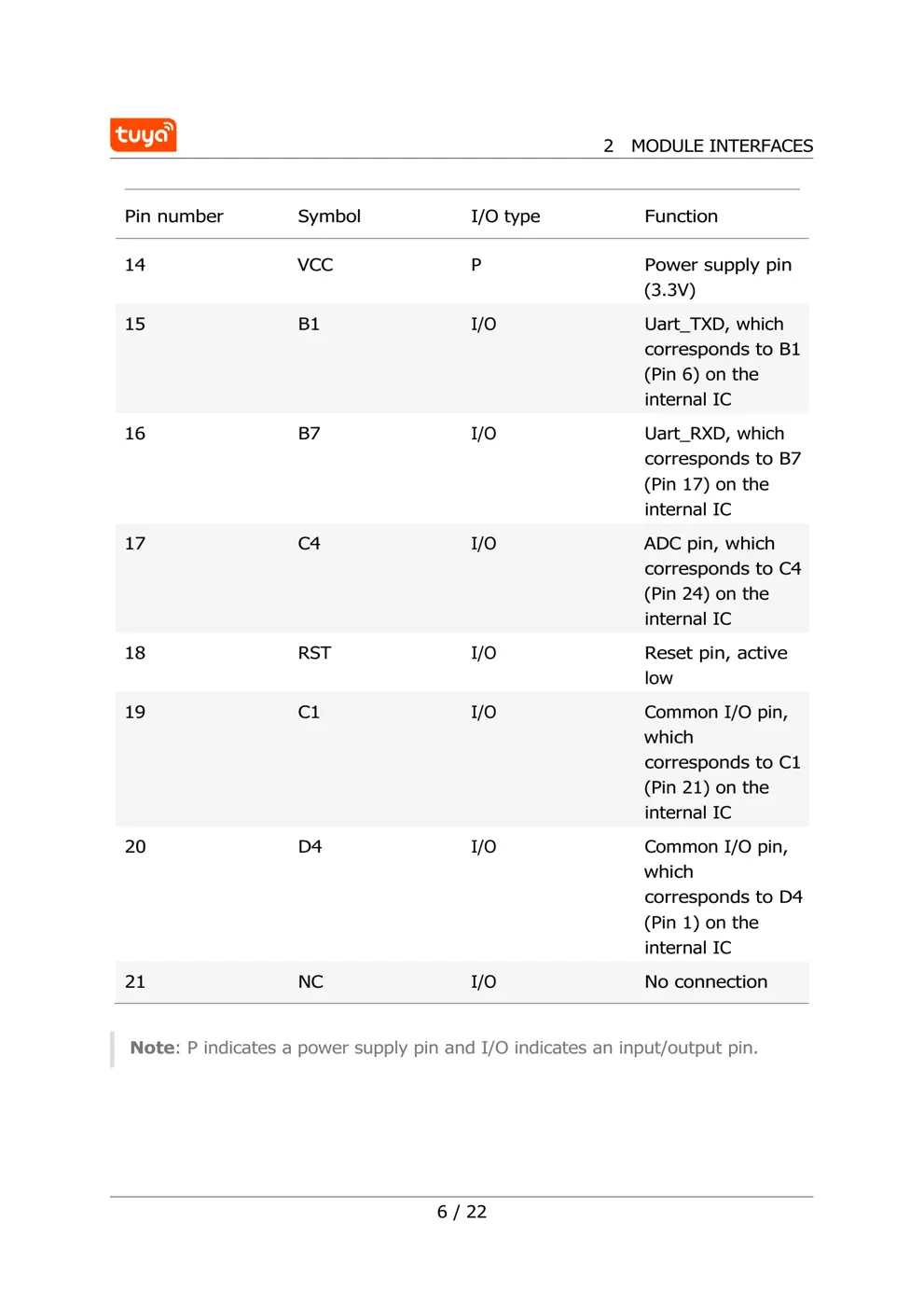
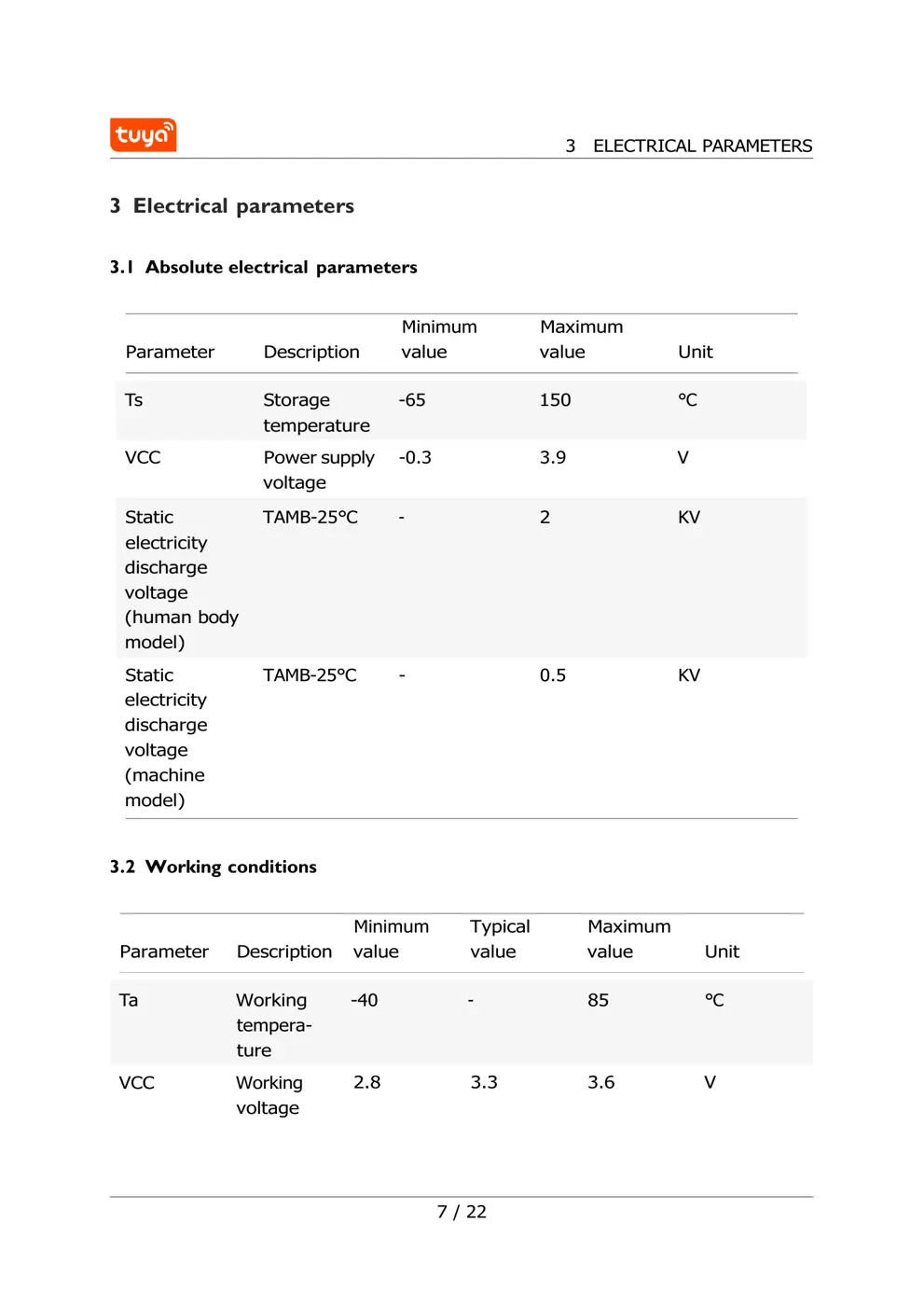
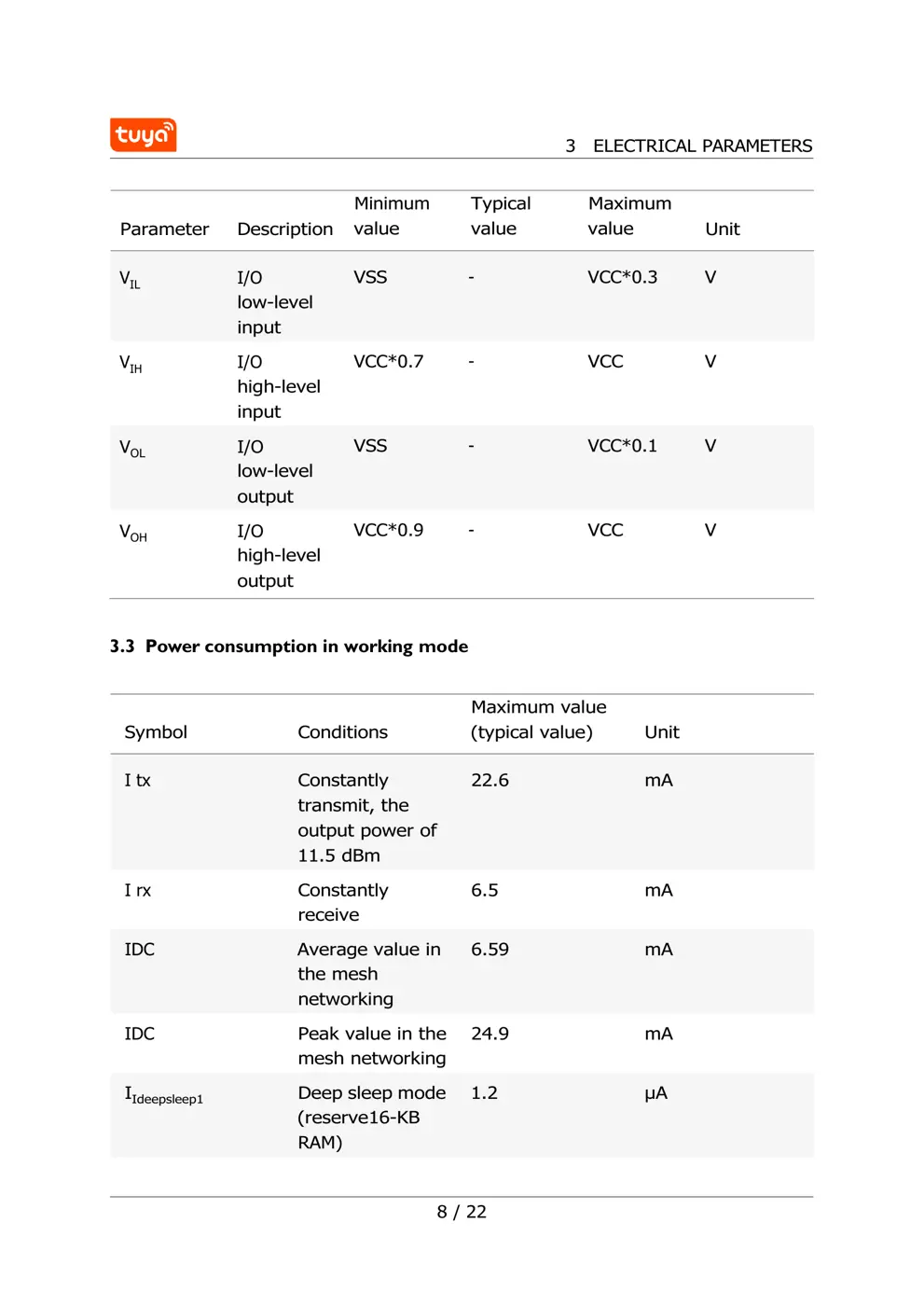
Scanned pages from the official user manual:
External Photos
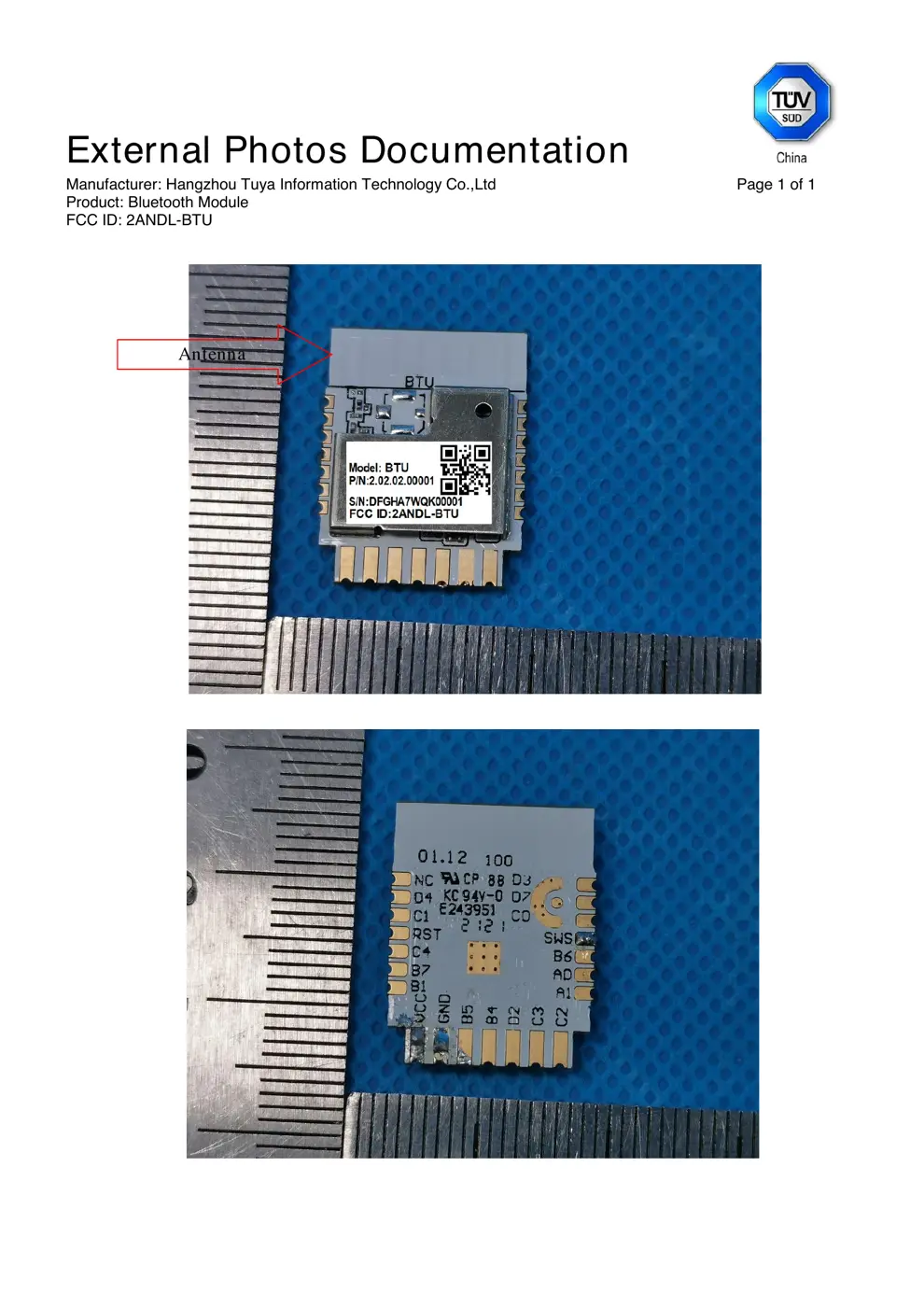
Photos of the device exterior:
Internal Photos
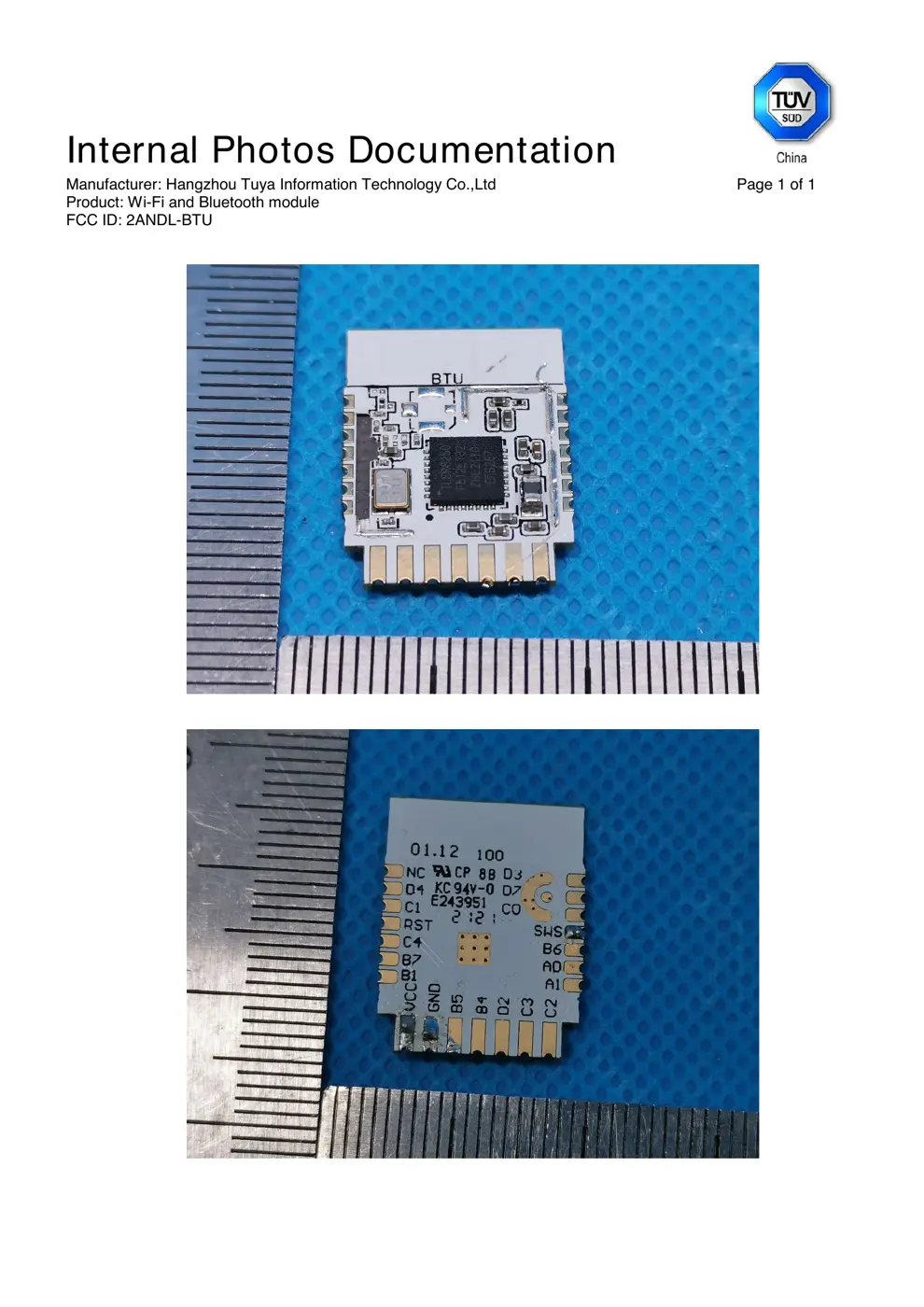
Teardown photos showing the PCB and components:
Verdict
The BTU is a Bluetooth device from the Tuya / Smart Life ecosystem.
📄 Click to view full text manual (SEO)
BTU Module Datasheet

Version: 20210525

Online Version

i

Contents

Contents

1 Product overview 2
1.1 Features ................................................................................................ 2
1.2 Applications ....................................................................................... 2
1.3 Change history ................................................................................... 2
2 Module interfaces 3
2.1 Dimensions and package .................................................................... 3
2.2 Pin definition ...................................................................................... 3
3 Electrical parameters 7
3.1 Absolute electrical parameters ............................................................. 7
3.2 Working conditions ............................................................................. 7
3.3 Power consumption in working mode ................................................... 8
4 RF parameters 9
4.1 Basic RF features ............................................................................... 9
4.2 RF output power ................................................................................ 9
4.3 RF receiving sensitivity........................................................................ 9
5 Antenna information 10
5.1 Antenna type ................................................................................... 10
5.2 Antenna interference reduction ......................................................... 10
6 Packaging information and production instructions 11
6.1 Mechanical dimensions ..................................................................... 11
6.2 Side view ......................................................................................... 12
6.3 The schematic diagram of package .................................................... 13
6.4 Production instructions ..................................................................... 14
6.5 Recommended oven temperature curve ............................................. 16
6.6 Storage conditions............................................................................ 19
7 MOQ and packaging information 20
8 Appendix: Statement 20

1 / 22
Contents

BTU is a low-power embedded Bluetooth module that Tuya has developed. It con-
sists of a highly integrated Bluetooth chip (TLSR8250), a few peripheral circuits, an
embedded Bluetooth network communication protocol stack, and rich library func-
tions.

1 PRODUCT OVERVIEW
2 / 22

1 Product overview

BTU consists of a low-power 32-bit MCU, a Bluetooth LE 5.0/2.4G radio-frequency
band, 4-Mbit/s flash memory, and 48-KB SRAM.

1.1 Features

• Embedded with a low-power 32-bit MCU, which can also function as an appli-
cation processor.
– The clock rate: 48 MHz
• Working voltage: 1.8 to 3.6 V. If the voltage is between 1.8 and 2.7 V, the
module can start, but the optimal RF performance cannot be ensured....