
WBR3D Reset & Teardown (FCC ID 2ANDL-WBR3D)
Factory reset and internal photos for Tuya Global WBR3D. Tuya / Smart Life smart plug.
January 15, 2026
•
10 read
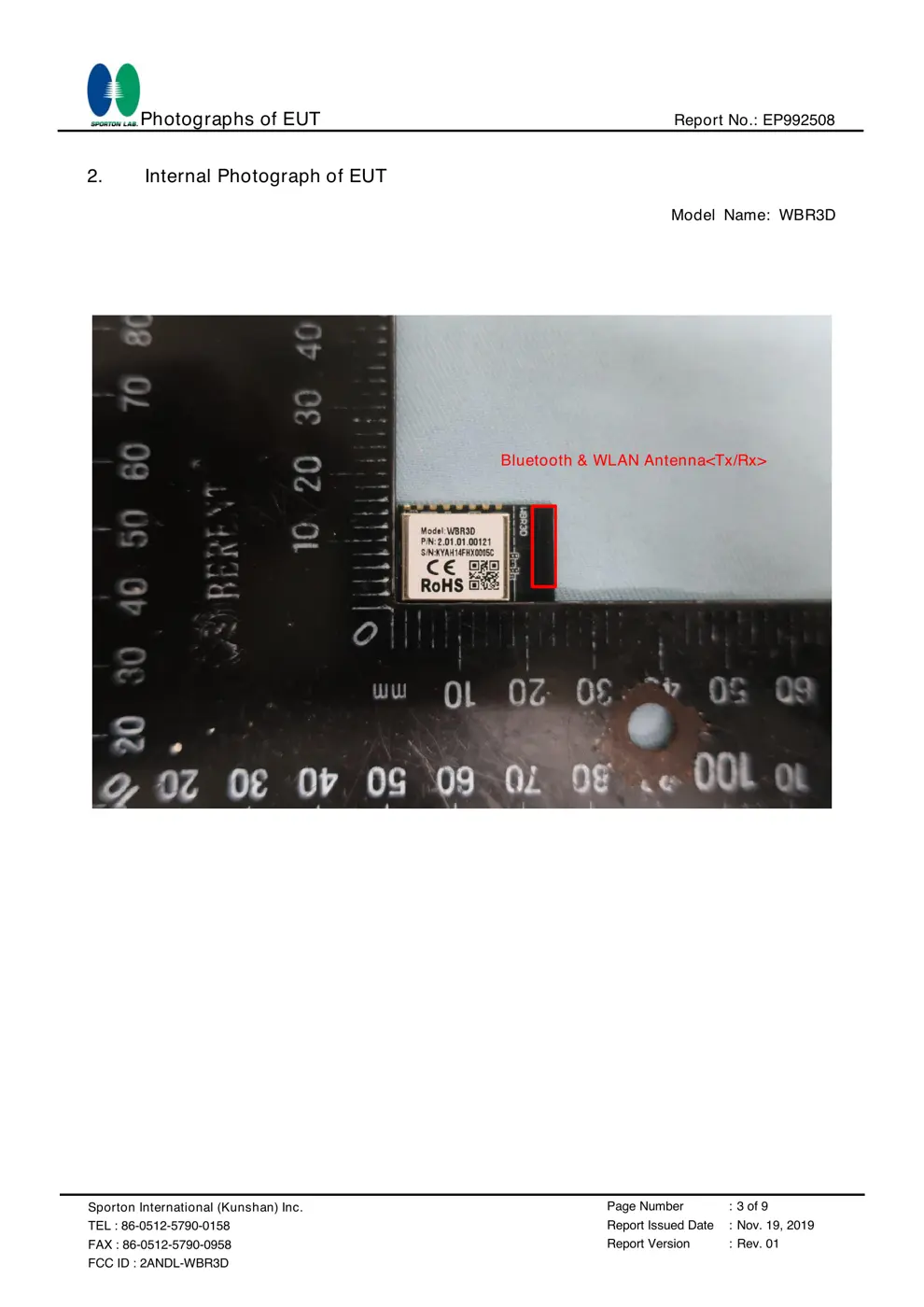
Before you buy the Tuya Global WBR3D, check what's inside.
The Tuya WBR3D is a compact, low-power embedded module featuring both Wi-Fi and Bluetooth connectivity, powered by the RTL8720DN chipset. It's designed for integration into smart home devices, offering flexibility with Wi-Fi and Bluetooth network protocols.
⚠️ NOTE: Ensure correct battery polarity and voltage levels.
Quick Specs
- Manufacturer: Tuya Global
- Model: WBR3D
- Protocol: WiFi
- Chipset: Realtek RTL8720
- Ecosystem: Tuya / Smart Life
- App: Smart Life
🔧 Geek Corner (Flashing Info)
- Chipset: RTL8720DN
- Flashable: ❌ No
- Info: While based on an open-source friendly chipset (RTL8720DN), the default Tuya firmware and potential hardware configurations make it difficult to flash custom firmware without significant effort and risk.
User Manual
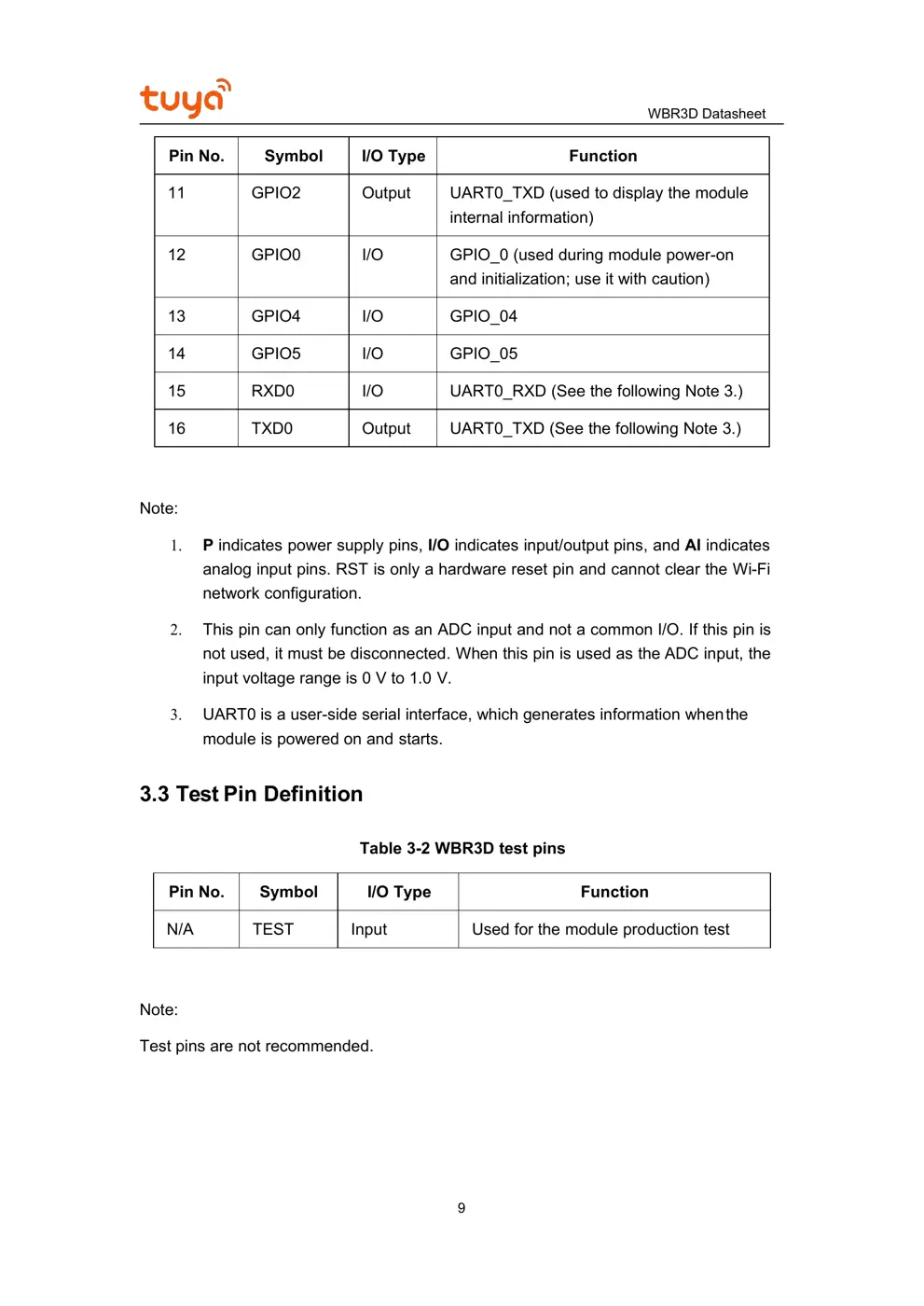
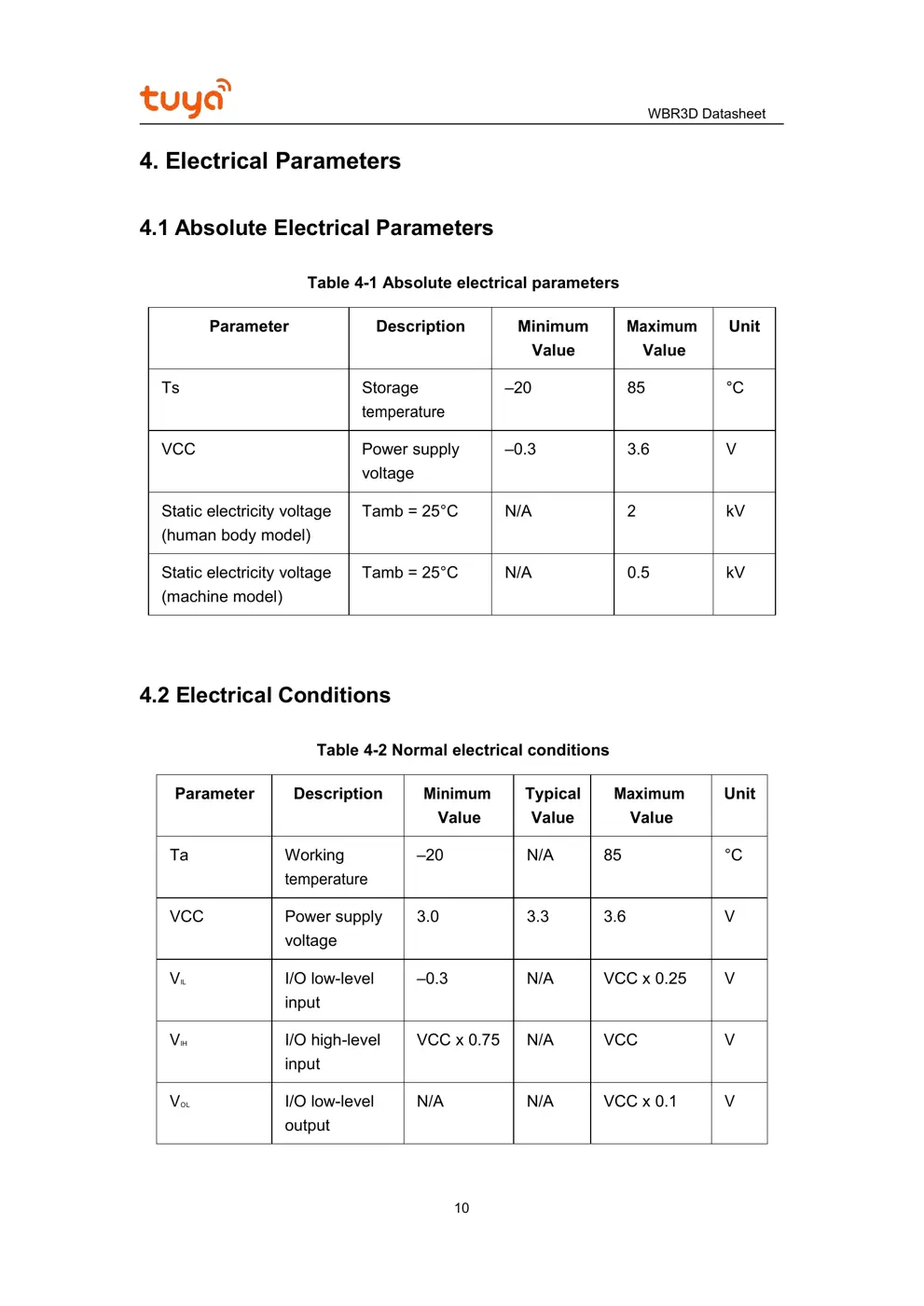
Scanned pages from the official user manual:

External Photos
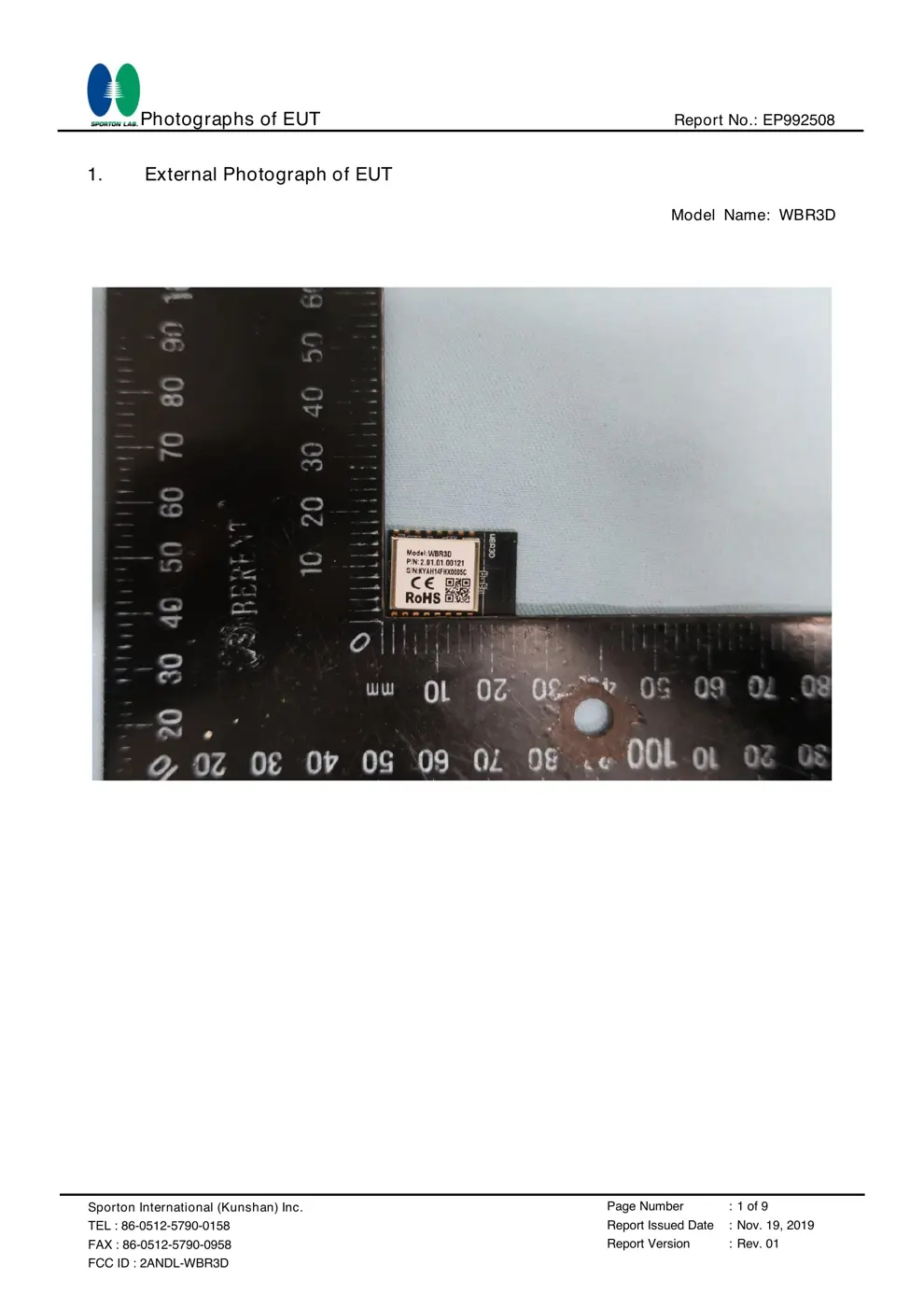
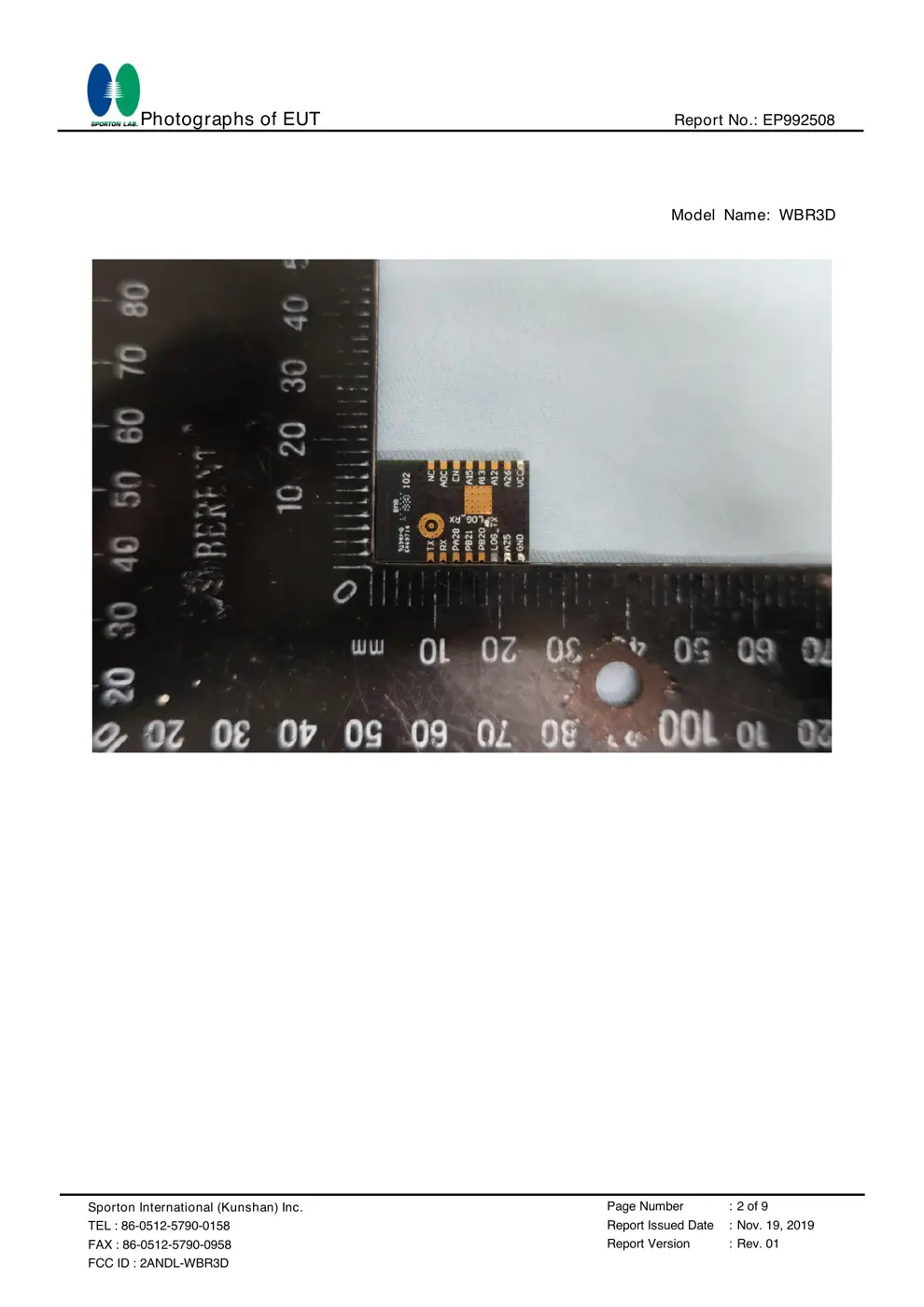
Photos of the device exterior:
Internal Photos
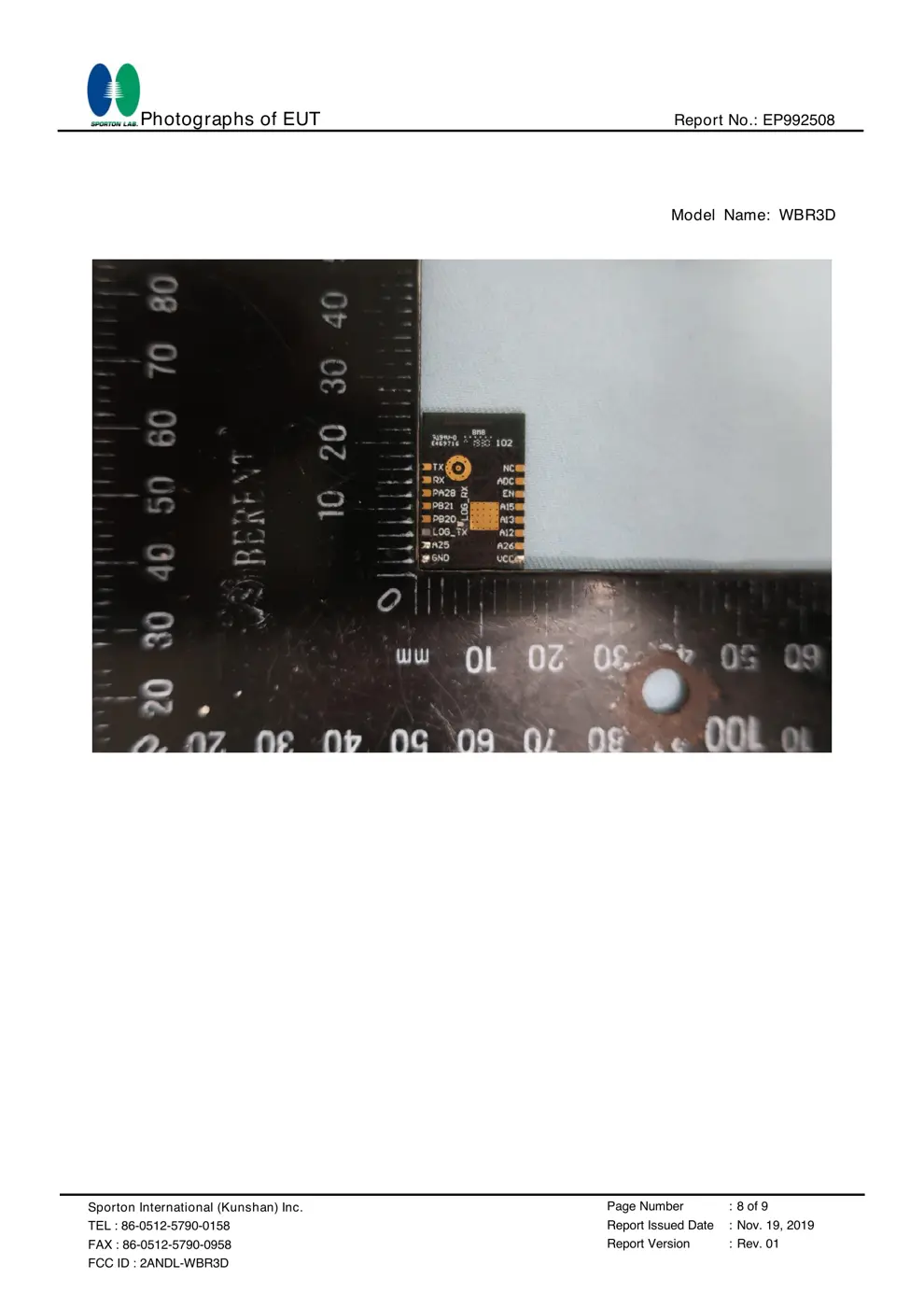
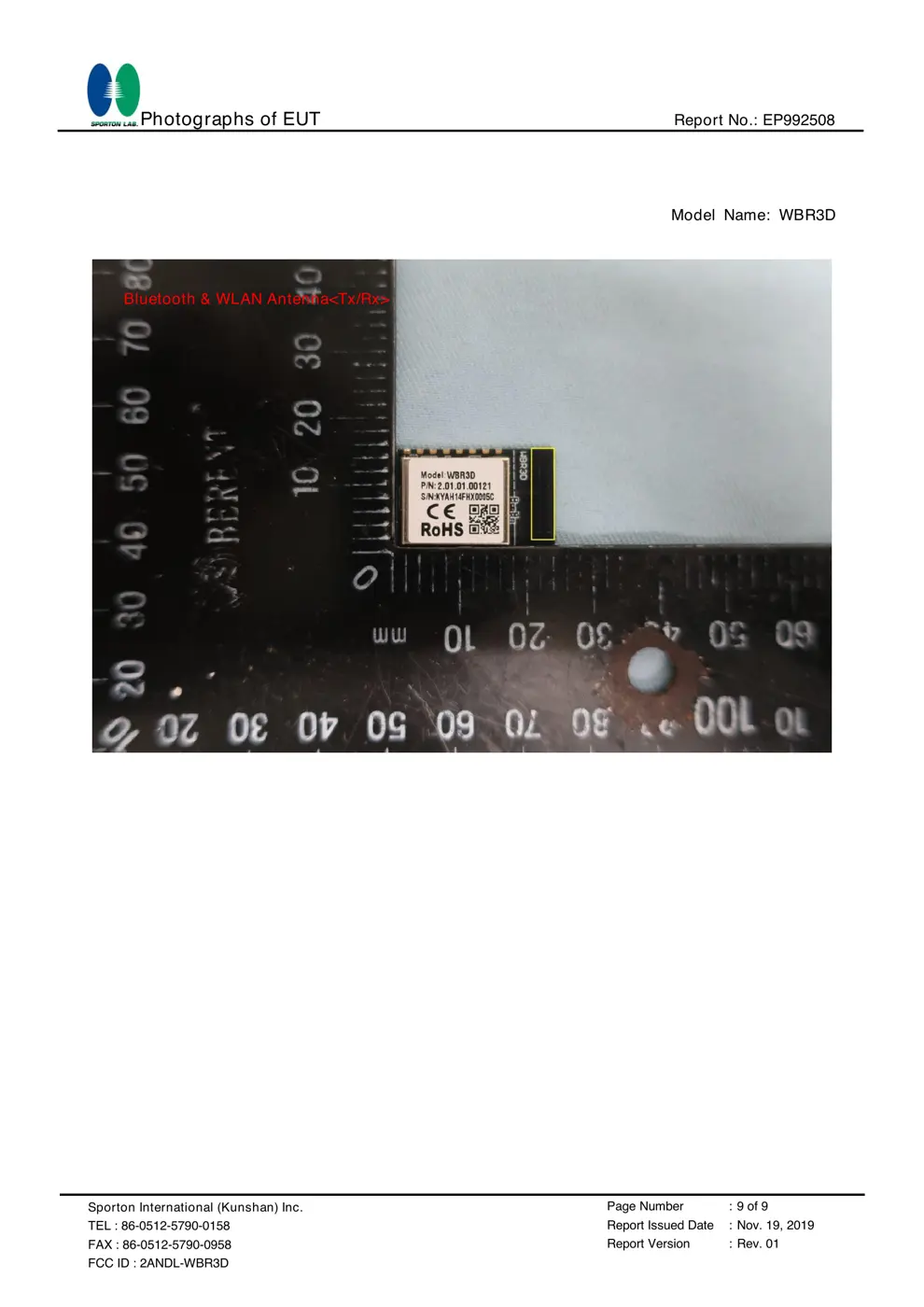
Teardown photos showing the PCB and components:
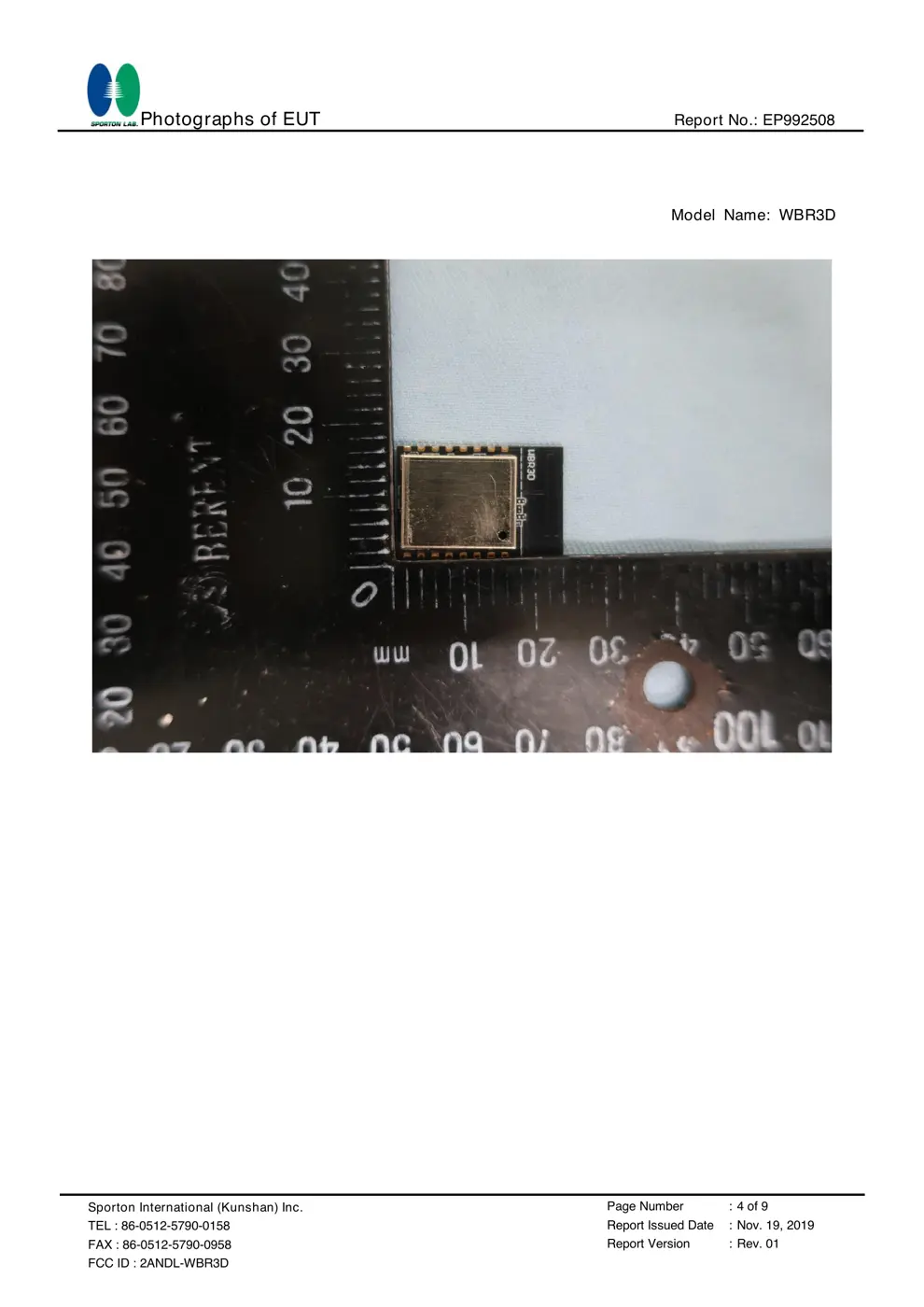
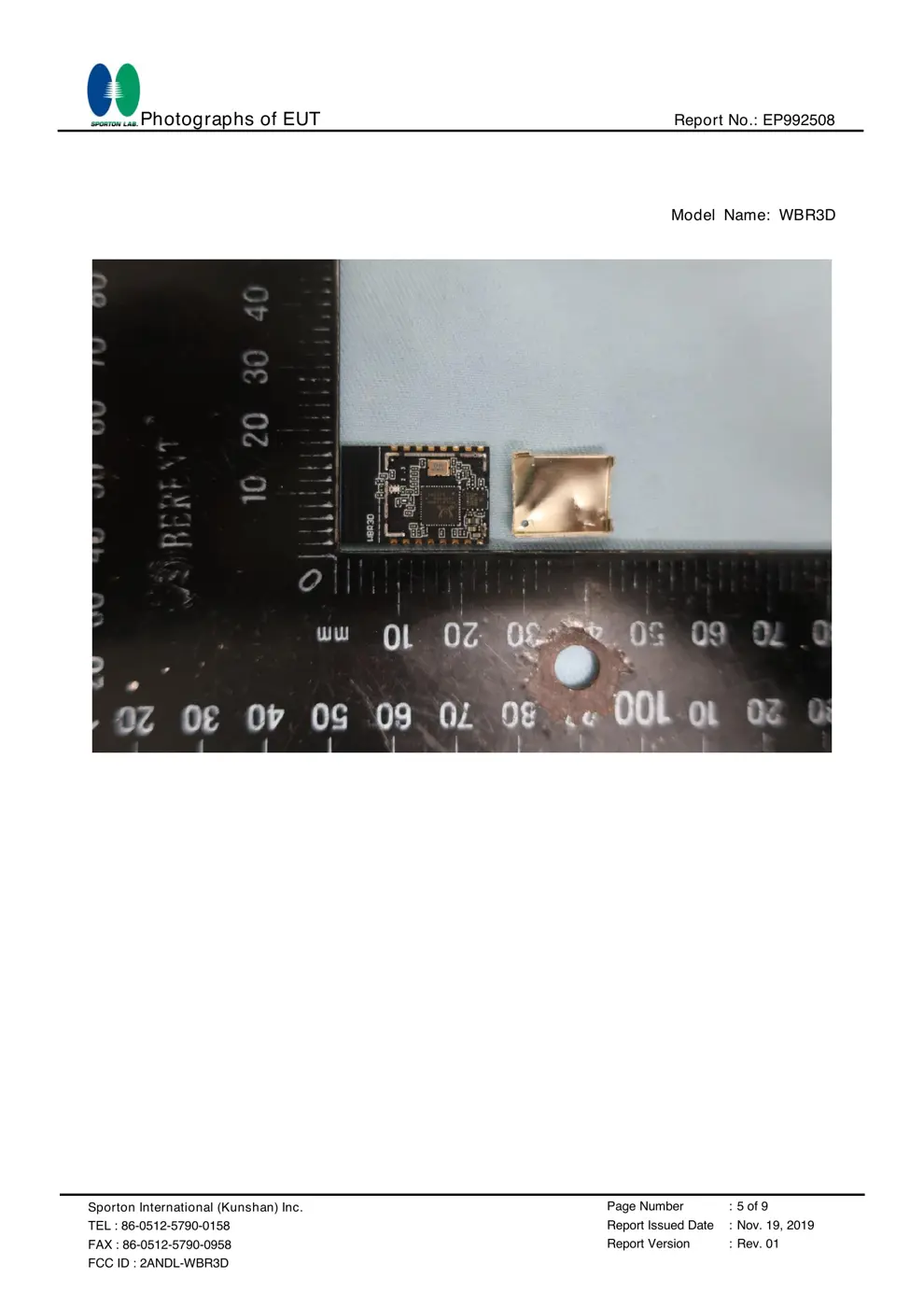
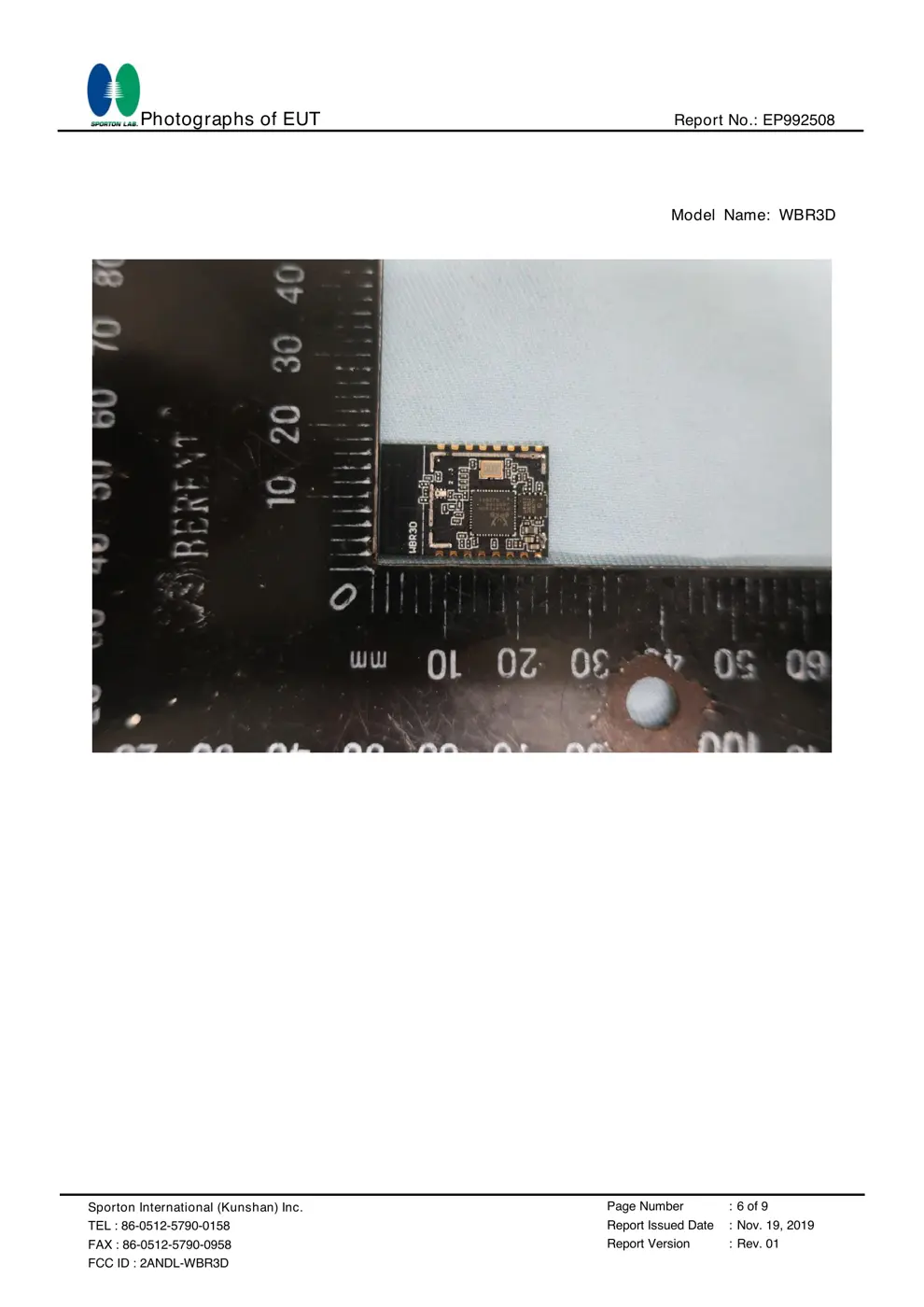
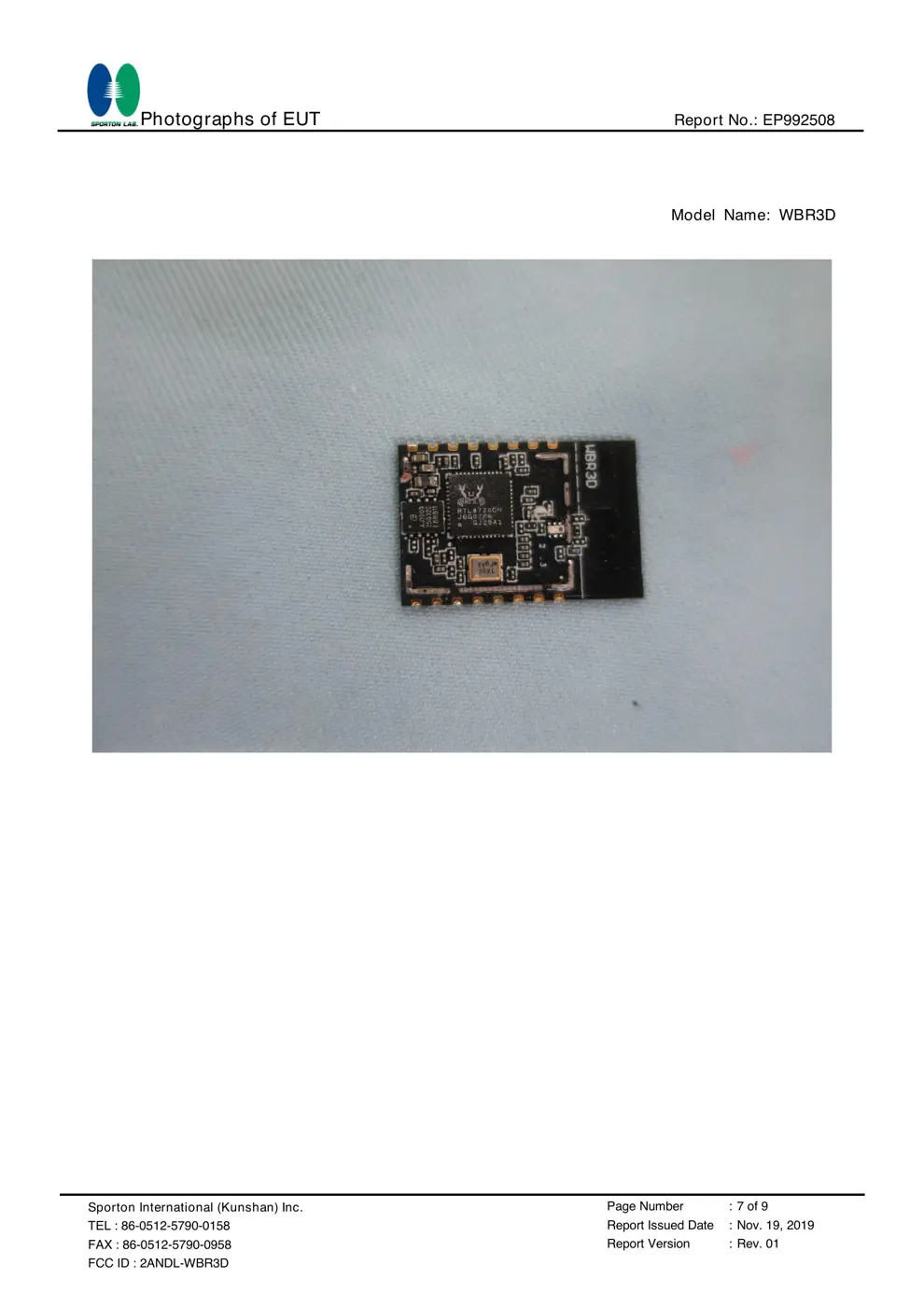
Verdict
The WBR3D is a WiFi device from the Tuya / Smart Life ecosystem.
📄 Click to view full text manual (SEO)
1
WBR3D Datasheet
Product
Manual
Tuya WBR3D Wi-Fi Module
Version: 1.0 Date: 2019-08-23 No.: 0000000001
Global Intelligent Platform
1. Product Overview
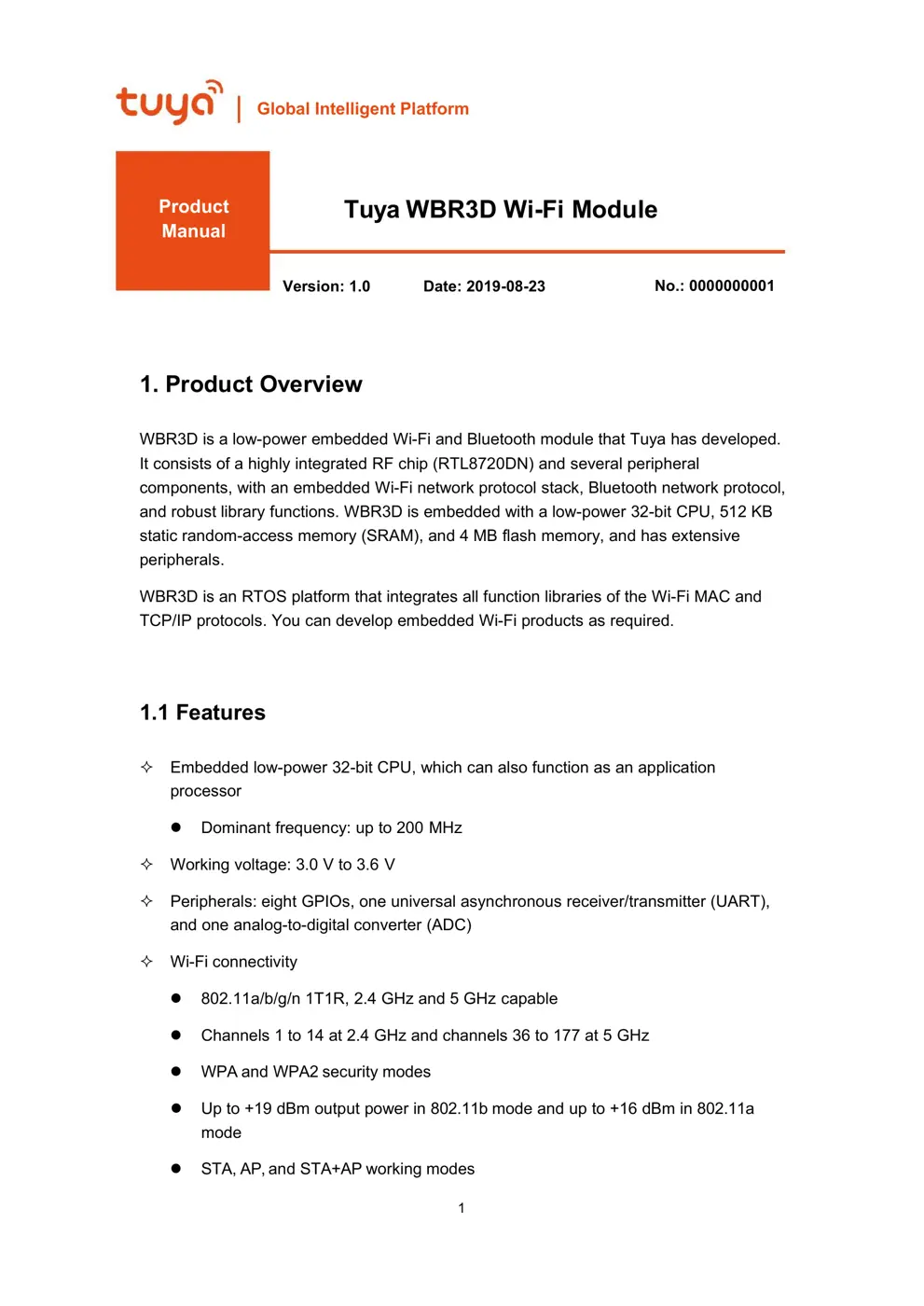
WBR3D is a low-power embedded Wi-Fi and Bluetooth module that Tuya has developed.
It consists of a highly integrated RF chip (RTL8720DN) and several peripheral
components, with an embedded Wi-Fi network protocol stack, Bluetooth network protocol,
and robust library functions. WBR3D is embedded with a low-power 32-bit CPU, 512 KB
static random-access memory (SRAM), and 4 MB flash memory, and has extensive
peripherals.
WBR3D is an RTOS platform that integrates all function libraries of the Wi-Fi MAC and
TCP/IP protocols. You can develop embedded Wi-Fi products as required.
1.1 Features
 Embedded low-power 32-bit CPU, which can also function as an application
processor
 Dominant frequency: up to 200 MHz
 Working voltage: 3.0 V to 3.6 V
 Peripherals: eight GPIOs, one universal asynchronous receiver/transmitter (UART),
and one analog-to-digital converter (ADC)
 Wi-Fi connectivity
 802.11a/b/g/n 1T1R, 2.4 GHz and 5 GHz capable
 Channels 1 to 14 at 2.4 GHz and channels 36 to 177 at 5 GHz
 WPA and WPA2 security modes
 Up to +19 dBm output power in 802.11b mode and up to +16 dBm in 802.11a
mode
 STA, AP, and STA+AP working modes
2
WBR3D Datasheet
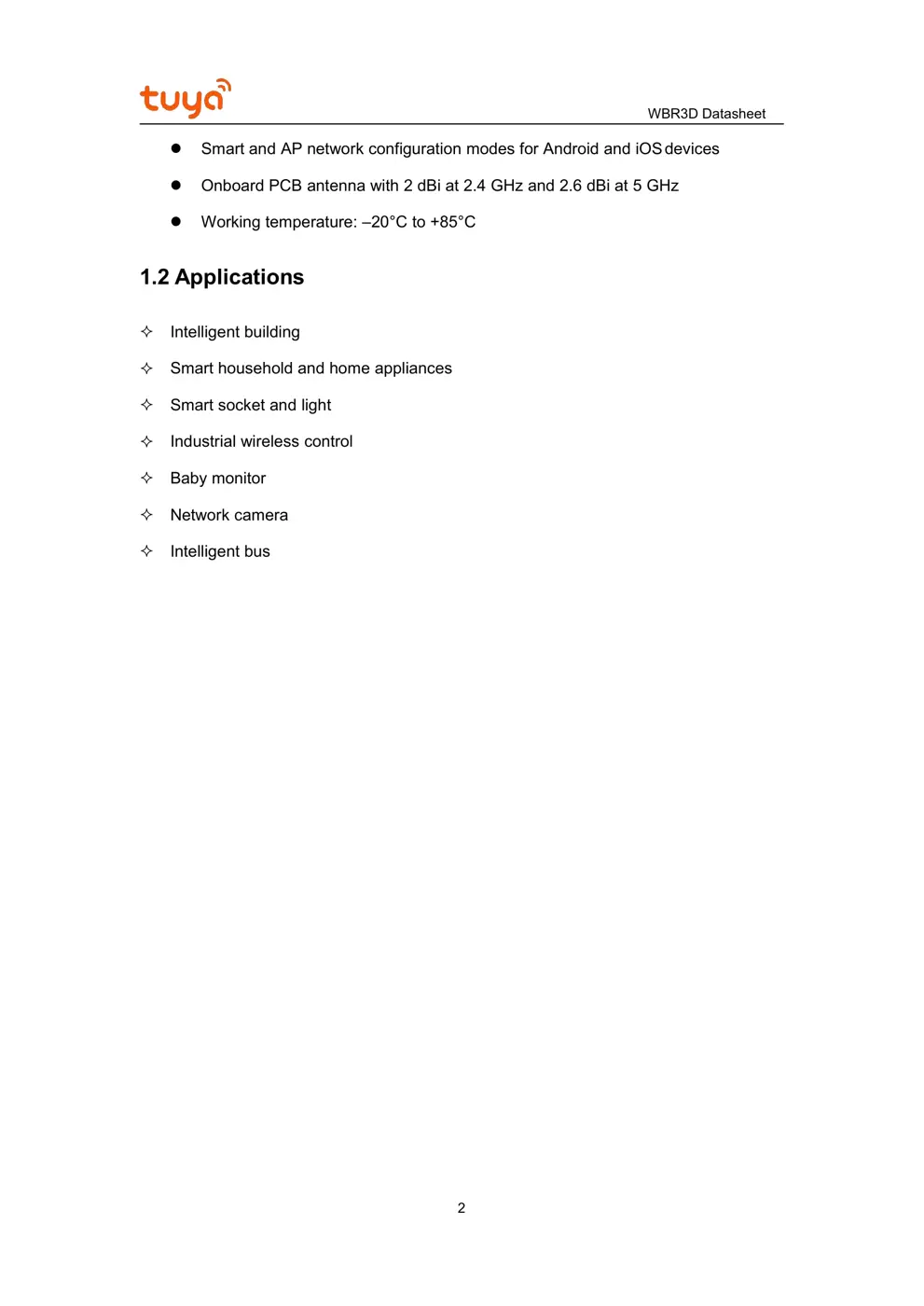
 Smart and AP network configuration modes for Android and iOS devices
 Onboard PCB antenna with 2 dBi at 2.4 GHz and 2.6 dBi at 5 GHz
 Working temperature: –20°C to +85°C
1.2 Applications
 Intelligent building
 Smart household and home appliances
 Smart socket and light
 Industrial wireless control
 Baby monitor
 Network camera
 Intelligent bus
3
WBR3D Datasheet
Change History
No. Date Change Description Version After Change
1 2019-08-30 This is the first release. 1.0.0
4
WBR3D Datasheet
Contents
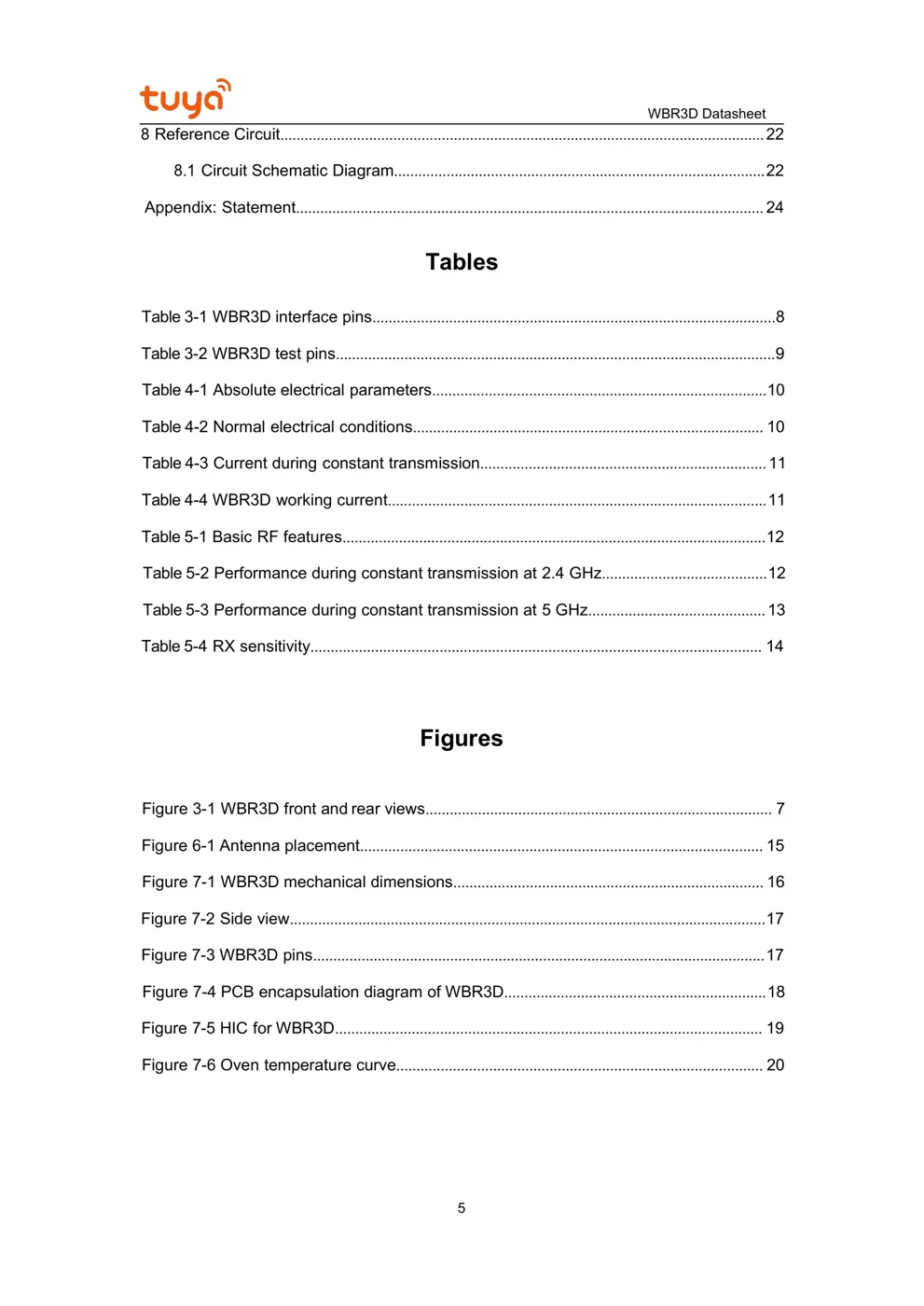
1. Product Overview........................................................................................................................ 1
1.1 Features.............................................................................................................................. 1
1.2 Applications........................................................................................................................ 2
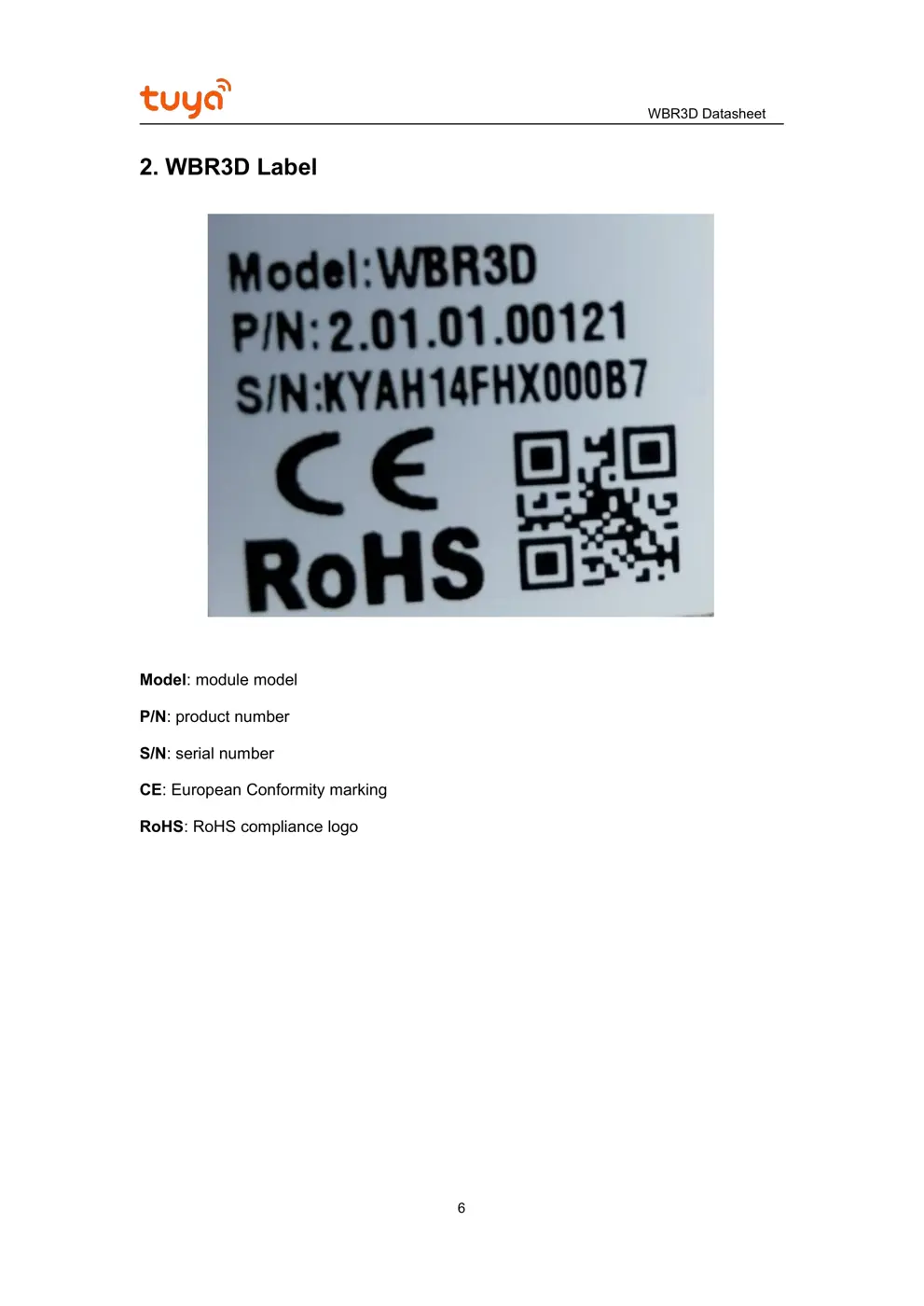
2. WBR3D Label...............................................................................................................................6
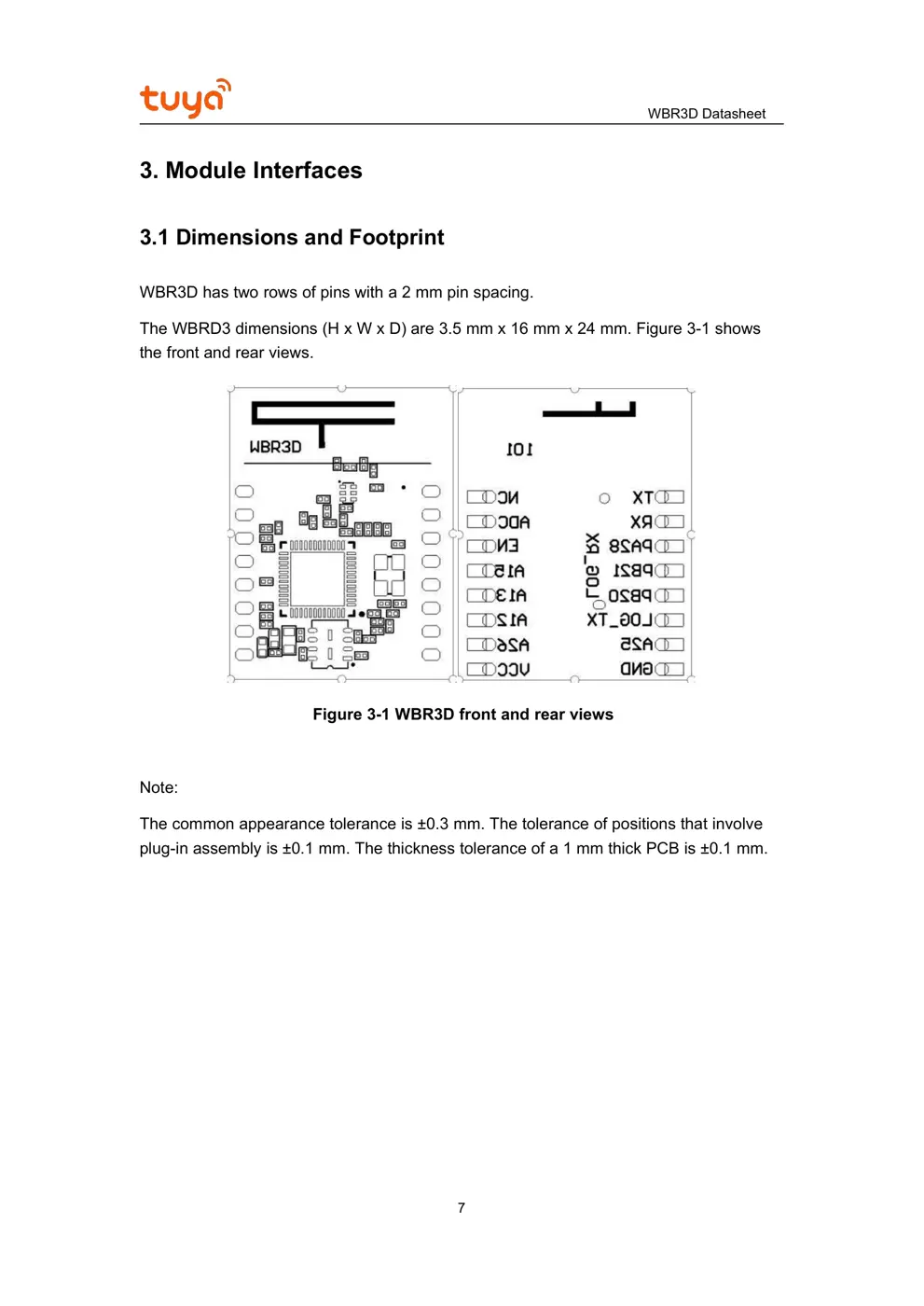
3. Module Interfaces........................................................................................................................ 7
3.1 Dimensions and Footprint................................................................................................ 7
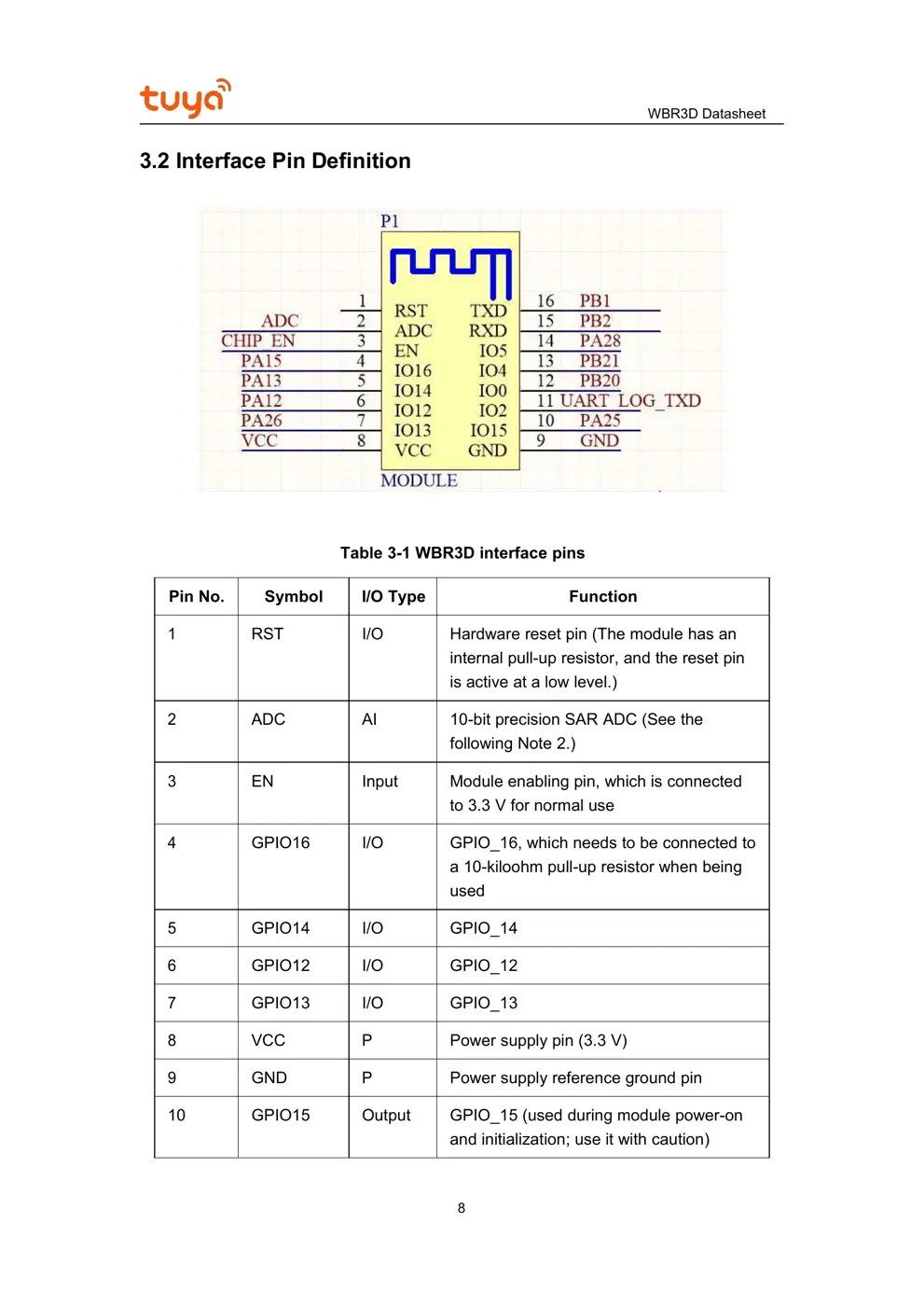
3.2 Interface Pin Definition..................................................................................................... 8
3.3 Test Pin Definition..............................................................................................................9
4. Electrical Parameters....................................................................